Sudan: MSF treats around 170 people for drone injuries in two weeks after strikes hit civilian areas
MSF urges warring parties to immediately spare civilians and humanitarian workers.
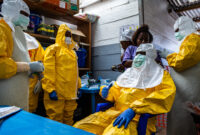
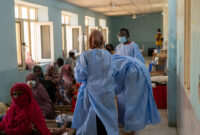
Drone attacks carried out by the Sudanese Armed Forces (SAF) and Rapid Support Forces (RSF) are hitting civilian areas and critical infrastructures, including schools, markets, healthcare facilities and water sources, across Sudan. In the first two weeks of February, Doctors Without Borders/Médecins Sans Frontières (MSF) teams have treated 167 patients suffering from penetrating injuries to the chest and abdomen, multiple fractures of limbs, head injuries and shrapnel wounds. MSF warns this pattern of attacks is placing civilians and humanitarian workers at grave risk and calls for their immediate protection.
On Feb. 15, an MSF team in Adré, eastern Chad, received 18 civilians—including four women and three children—who were injured in SAF drone strikes on a fuel market just across the border in Adikong, West Darfur state. On Feb. 6, 29 injured people were treated at the MSF-supported hospital in Tine, also in eastern Chad, following two RSF drone attacks in western Sudan. The strikes killed at least 10 people, four of whom died in the hospital. Since that date, patients have been arriving frequently due to strikes.
“The war in Sudan is being fought with drones beyond the front lines. Our teams are regularly treating large numbers of drone wounded people, including women and children.”
Esperanza Santos, MSF head of emergencies

“Among the patients we received, a nine-year-old boy arrived with a large shrapnel wound to his eye, extensive facial fractures and two amputated fingers,” says Virginia Moneti, MSF project medical coordinator in Tine. “He was in severe pain and exposed to dust after a long journey to reach the facility. Even with optimal care, he is likely to face long-term disability. He was transferred to Ndjamena for further treatment.”
Our teams in Zalingei, Central Darfur, also treated 29 patients this month following several attacks, including at least eight civilians.
Following drone strikes on Nov. 3 in North Darfur state, Sudan, MSF was forced to withdraw from Kornoi and Tina, halting vital medical and humanitarian services. These attacks have made it impossible for MSF to maintain a safe presence, leaving people without essential care.
“The war in Sudan is being fought with drones beyond the front lines,” says Esperanza Santos, MSF head of emergencies. “Our teams are regularly treating large numbers of drone wounded people, including women and children. These strikes are used to disrupt supply lines, damage civilian infrastructure and at risk of creating siege-like conditions in contested areas.”
In North Kordofan, where MSF recently launched an emergency response in El Obeid, drone strikes reportedly hit a humanitarian convoy, a vehicle carrying displaced people and a bus station on Feb. 6 and 7. Drone attacks reportedly also hit various health facilities in Kadugli and Dilling, South Kordofan state, in the first two weeks of February.
“Recent incidents reveal a disturbing pattern in the conduct of the war in Sudan,” says Santos. “Drone strikes are not limited to military targets, sometimes with multiple follow-ups strikes on the same location and are causing devastating harm: civilians, including children, are being killed or severely injured in blatant disregard of international humanitarian law. Armed actors must take immediate measures to protect civilians and humanitarian workers. Civilians must be always spared.”
MSF is deeply alarmed by this situation. When civilian areas and humanitarian infrastructure are not respected, our teams cannot operate safely, leaving communities without essential care. This is the exact opposite of what the people of Sudan urgently need, as humanitarian needs are immense and an immediate scale-up of assistance is critical.