
This Ramadan, you can help provide emergency care to people who need it most
As people come together to observe a month of fasting, reflection and compassion, we invite you to join us and stand in solidarity with communities facing some of the world’s most difficult crises.
This Ramadan, consider making a gift to Doctors Without Borders/Médecins Sans Frontières (MSF), to help provide critical medical and humanitarian care to people in Afghanistan, Bangladesh, Palestine, South Sudan, Sudan and beyond.
Your Zakat can provide healthcare for people facing crisis in Bangladesh
This year, we are pleased to share that we are accepting Zakat donations. MSF has been advised by prominent Sharia advisory firm Amanie Advisors to ensure we can allocate your Zakat and Sadaqah in accordance with Islamic principles and our own medical humanitarian requirements.
By entrusting MSF with your Zakat, you will be directly supporting our hospital on the hill in Cox’s Bazar, Bangladesh. Over one million Rohingya people are currently living in refugee camps in Cox’s Bazar, after fleeing violence and persecution in neighbouring Myanmar. Faced with significant restrictions on their movements and daily lives, many Rohingya people struggle to access or afford healthcare.
We first set up the Hospital on the Hill in 2018 to help meet the medical needs of people in the camps. Today, we have over 85 beds in our inpatient pediatric department during the peak season, run a laboratory that conducts over 5,000 tests a month and operate the only intensive care unit in the camp. We also provide pediatric care, sexual health and reproductive services and mental health consultations.
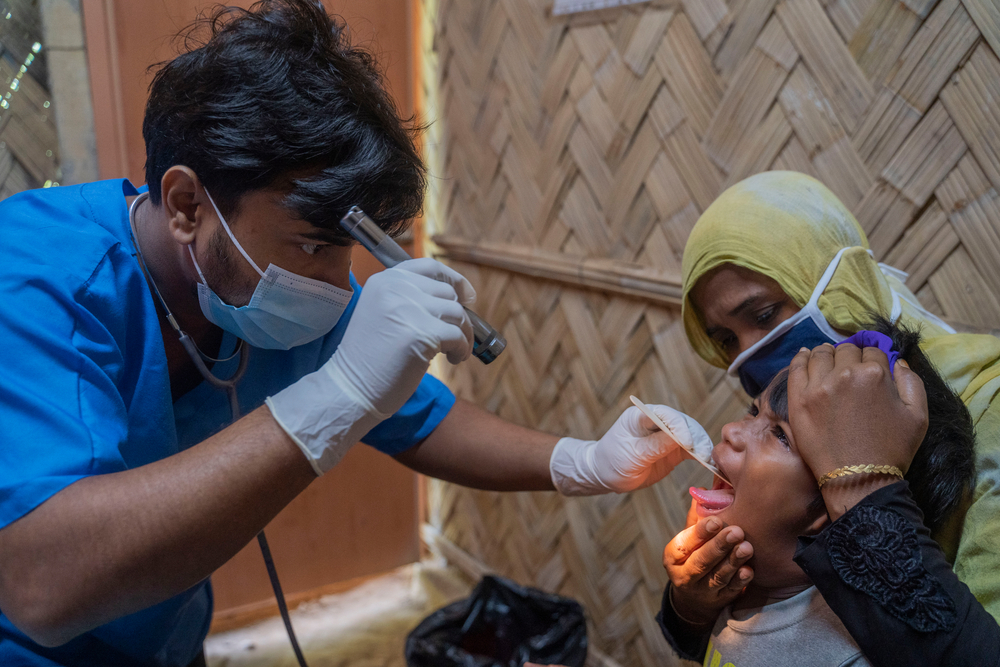
Right now, conditions for Rohingya people in Cox’s Bazar are deteriorating. People continue to arrive from Myanmar in need of assistance. Significant cuts in global humanitarian funding are putting vital assistance at risk for a community that is almost entirely dependent on aid.
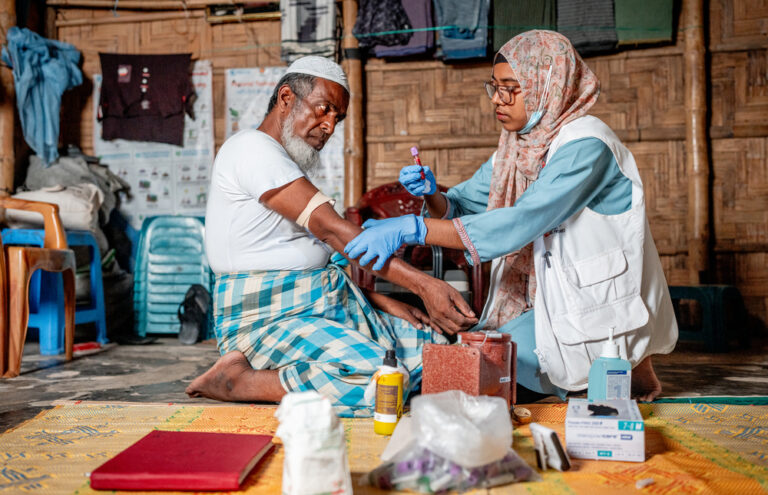
You can help make a difference for Rohingya communities in Cox’s Bazar today by dedicating your Zakat to MSF. Your gift will be vital in supporting our Hospital on the Hill and helping our teams continue to meet the medical needs of people who have few other places to turn.
DEDICATE YOUR ZAKAT
Our work is not only to provide medical care. It is also an act of solidarity. We believe the principles we stand for align with the principles of Islamic giving.
GIVE SADAQAH
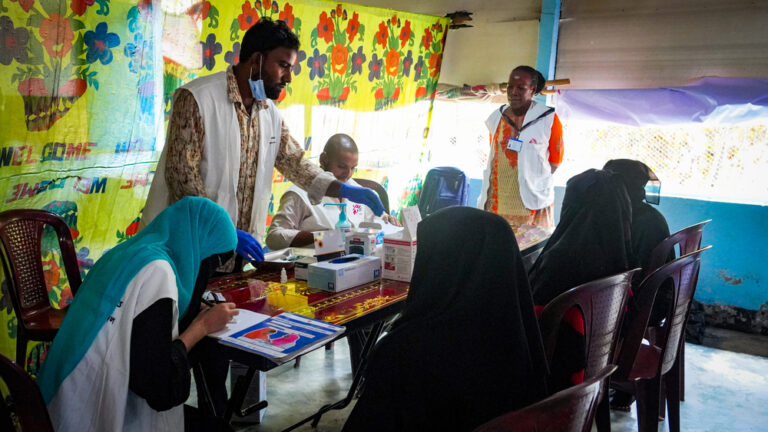
Not sure where to dedicate your Zakat yet? Give Sadaqah. If you are still considering how best to fulfil your Zakat but would still like to find a way to support MSF, you may choose to give Sadaqah instead.
Your generosity and compassion help MSF reach people facing crises, respond quickly to emergencies, broaden the range of medical services we provide and improve the quality of our medical care.
Where could your Sadaqah make an impact?
Afghanistan
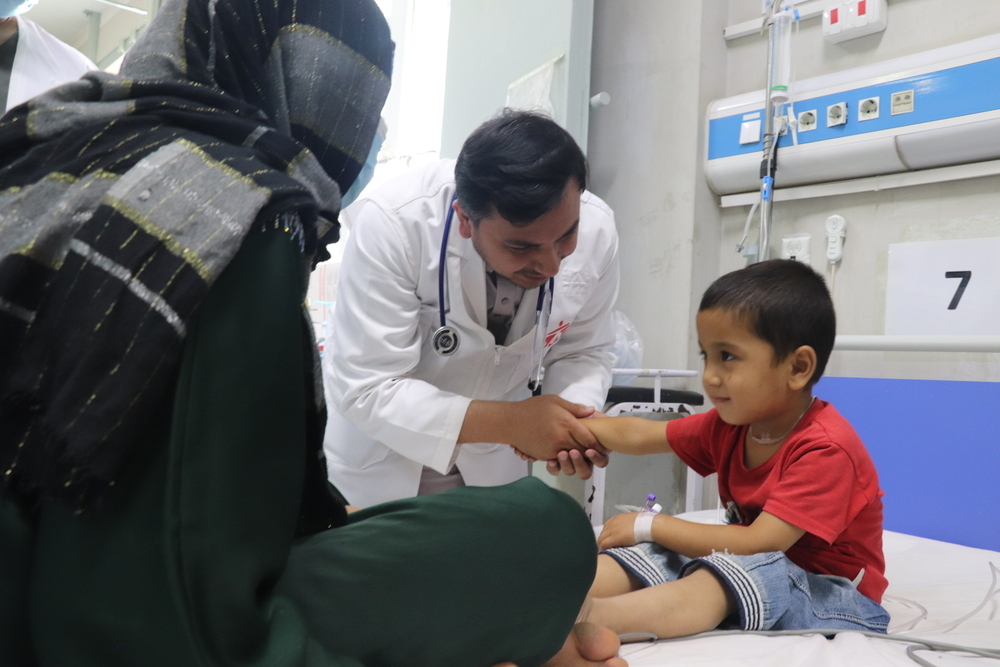
Afghanistan is experiencing a complex humanitarian emergency resulting from years of war and barriers to accessing healthcare, particularly for women and girls.
Our teams in Afghanistan support overburdened medical facilities and provide critical services such as emergency and trauma care, and maternal and pediatric services. We also bring healthcare to remote communities.
In Balkh province, we collaborate with the Ministry of Public Health to run a pediatric emergency room and a neonatal intensive care unit (NICU) in Mazar-i-Sharif regional hospital. People in the surrounding rural regions have few other options to access care, and many of our young patients come to us in critical condition, with measles, pneumonia or severe malnutrition. In October 2025 alone, our team admitted a 1,211 patients to the pediatric and NICU units.
Palestine* and the surrounding regions
Gaza lies in ruins. Since October 2023, more than 70,000 Palestinians have been killed and more than 171,000 have been wounded. This includes over 1,700 health workers, including 15 of our own MSF colleagues. Meanwhile, in the West Bank, settler violence and Israeli incursions continue to displace Palestinians and limit people’s access to healthcare and other essential services.
As of January 2026, MSF supports one in five of Gaza’s hospital beds and assists one in three mothers during childbirth. In the West Bank, we operate mobile clinics to reach people cut off from healthcare and train community members on how to provide first aid when facilities are inaccessible during frequent Israeli military incursions.

As of January 2026, MSF supports one in five of Gaza’s hospital beds and assists one in three mothers during childbirth. In the West Bank, we operate mobile clinics to reach people cut off from healthcare and train community members on how to provide first aid when facilities are inaccessible during frequent Israeli military incursions.
We also provide care and assistance to people in the surrounding region who have been impacted by this crisis – including rehabilitative care for war-wounded children we have managed to evacuate to our reconstructive surgery hospital in Amman, Jordan. In Lebanon, where access to healthcare remains extremely limited due to widespread damage to infrastructure following the escalation of the conflict with Israel in 2024, we work in some of the hardest hit governates. This includes running mobile clinics and mental health services, in addition to rehabilitating and supporting three basic healthcare centres.
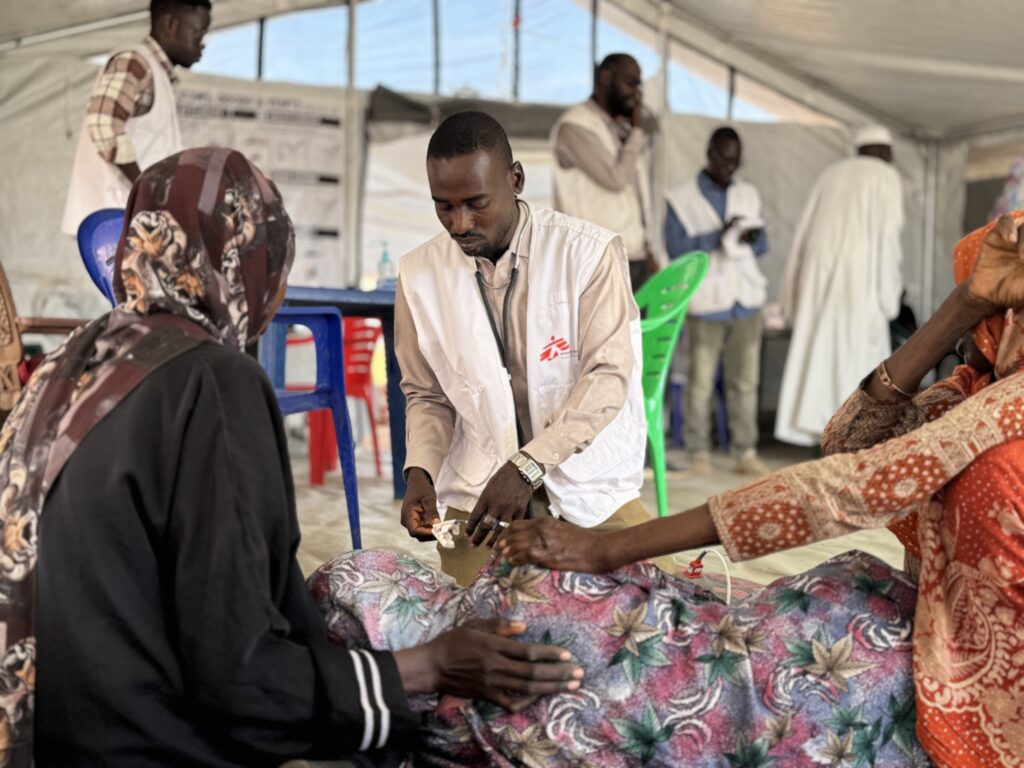
Sudan
For over two and a half years, a brutal civil war between the Sudanese Armed Forces (SAF) and the Rapid Support Forces (RSF) has continued unabated. Right now, according to OCHA, 30.4 million people in Sudan need humanitarian assistance. That’s almost the equivalent to 3 in every 4 Canadians.
This has made the humanitarian crisis in Sudan the largest in the world. Civilians are enduring extreme violence that has devastated every aspect of their lives. Critical infrastructure, including hospitals, have been destroyed, while millions of people are now facing acute food insecurity and recurring disease outbreaks.
Right now, MSF teams work in 8 out of 18 states in Sudan. We run or support hospitals and provide vital services such as surgical care and wound management, maternity and pediatric care and routine and vaccination campaigns. Our teams also assist people living in displacement camps by constructing boreholes and latrines to support sanitation, in addition to distributing food and water.
South Sudan
People in South Sudan are facing a deteriorating humanitarian situation at a time of declining international interest and support. In 2025, violence between government and opposition forces and non-state armed groups increased steeply, marking the worst escalation since the signing of a 2018 peace agreement.
MSF runs regular and emergency projects throughout South Sudan, offering a range of services including general and specialist healthcare and mental health support. In 2025, we also responded to South Sudan’s largest cholera outbreak. Between October 2024 and October 2025, we treated 35,000 cholera patients across all our projects and even opened additional emergency interventions to ensure that we could continue to meet people’s medical needs.
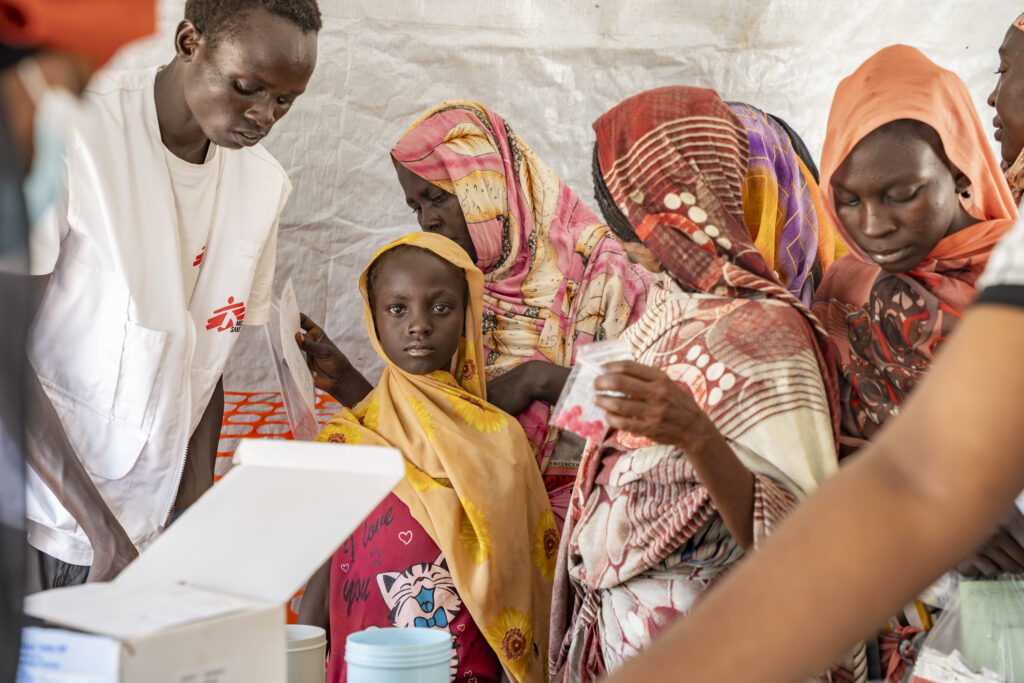
Who is MSF
MSF is an international medical humanitarian organization working to prevent avoidable deaths, reduce human suffering and uphold people’s dignity. We provide vital medical assistance to people affected by conflict, epidemics, disasters and lack of access to healthcare in more than 70 countries globally.
The people we work with and assist are at the centre of everything we do. Our work is guided by a strict code of medical ethics, including the principle of doing no harm. When medical assistance alone is not enough, we may also provide shelter, water and sanitation, food or other services.
[Disclaimer] *Content accurate as of February 18, 2026. Given evolving administrative and access conditions in Gaza/West Bank, MSF’s registration and operational context may change. This content reflects the most current information available at the time of publication.