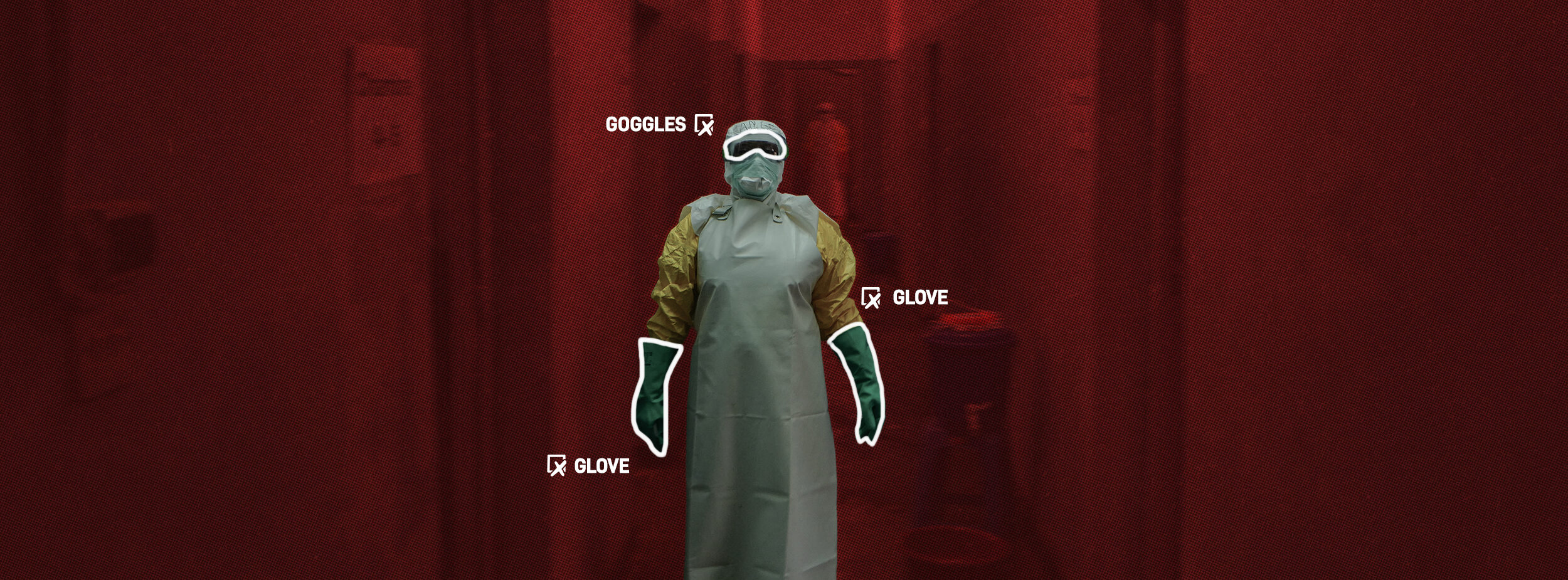
Tell your MP to stand up for people in crisis
Hard times reveal whether our values stand under strain. They reveal if our solidarity cracks under pressure. And they reveal what kind of country we choose to be.
When things are hard at home, we’re told to look inward. To focus on “us”, not “everyone else.”
We’re told that hopelessness is inevitable; that compassion is a luxury, that our concern should stop at our borders.
We are told that responding to global emergencies prevents us meeting needs at home.
At Doctors Without Borders/Médecins Sans Frontières (MSF), we have seen the deadly consequences of wealthy countries stepping back when people’s humanitarian needs reach historic highs.
We are already seeing gaps appearing now that international funding is diminishing. Supply chains are being cut, other organizations are being forced to close or leave, and health systems — which are already in crisis — are cracking under the pressure of overwhelming humanitarian need.
Now is the time for more global action, not less. Now is the time for those who can help, to stand with those in need. This is not the time to turn away, but to show solidarity.
Canada must resist the global trend to reduce humanitarian assistance funding. We will always stand with people caught in conflict, epidemics disasters or exclusion from healthcare.
TELL YOUR MP
Use the form below to email your Member of Parliament (MP) and urge them to push for an increase to Canada’s humanitarian assistance in the next federal budget in November 2026.
Read the letter
Dear [MP name will go here],
As a constituent in your riding, I am asking for your leadership to ensure Canada does not retreat from its crucial support for people facing urgent humanitarian crises around the world.
Canada has long responded to the most urgent needs of people facing war and crisis. To me, this reflects the best of who we are as a country. At a time when these needs are rising and countries around the world are pulling back, Canada has a choice. We can turn inward, or we can continue a long tradition of showing up when lives are at stake. I hope you will help ensure that Canada chooses leadership, and that this commitment is reflected in Budget 2026.
In Haiti, families are struggling to access food, clean water and basic medical care as violence deepens and essential services collapse. In Sudan, millions of people have been forced from home and mothers are bringing severely malnourished children to overcrowded clinics with nowhere else to go. In eastern Democratic Republic of Congo (DRC), the Ebola disease outbreak is spreading through communities already devastated by violence and displacement.
To me, these are not distant crises. They are people like you and me, trying to protect the people they love in impossible circumstances.
At a time when the United States, the United Kingdom, Germany, France and many other countries have chosen to slash their humanitarian budgets, the consequences are already being felt. Around the world, people are being asked to survive war, hunger and disease with less support than before. Health clinics are closing. Food distributions programs are shrinking. Disease outbreaks are becoming harder to contain. Health workers are being forced to do more with less.
Canada must not join this dangerous retreat. We must wholeheartedly reject it and show that turning our backs on people in crisis is not who we are.
Although organizations like Doctors Without Borders rely overwhelmingly on private donations, their teams witness every day the consequences when the global humanitarian system is stretched beyond its limits. But no single organization can meet these needs alone. Strong, flexible humanitarian funding enables other organizations to respond quickly as crises evolve and helps people meet their most urgent needs before emergencies become catastrophes.
That is why I want Canada to restore its humanitarian funding when it matters most.
Canada has reached $1.3 billion in humanitarian assistance before. Restoring to that level of funding today is not a new commitment, but a necessary step that reflects today’s realities and ensures humanitarian organizations can respond wherever people’s needs are greatest.
As the government prepares Budget 2026, I urge you to support restoring Canada’s humanitarian assistance funding to at least $1.3 billion and protecting the flexible funding that helps keep health clinics open, food distribution programs running, clean water flowing and emergency shelter within reach for people caught in crisis.
While others look away, I want Canada to recognize humanitarian assistance as essential, not optional, and continue to show up for people facing war and crisis around the world. I hope I can count on you, as my elected representative, to ensure Canada continues to show leadership and that our commitment to people in crisis does not stop at our borders.
Sincerely, [Your Name]
Why Canada’s humanitarian assistance matters
In 2020, a brutal war erupted in Ethiopia’s Tigray region. Hundreds of thousands of people are thought to have been killed. Others fled in search of safety, including several thousand who reached the Um Rakuba refugee camp in neighbouring Sudan.
Life in refugee camps is difficult. Those who have been displaced are cut off from everything they once had — incomes, homes, support networks, lifelines. At the height of the Tigray conflict, around 35 national and international organizations had set up operations in and around the camp. Refugees arriving in Um Rakuba could find some of the crucial services they needed to survive, including shelter, food and medical care.
Humanitarian assistance for urgent needs
Humanitarian assistance is about emergency response. It provides immediate, essential care to mitigate acute human suffering. It is a very specific aspect of foreign aid, which is a much larger category that includes everything from building schools to military spending. Humanitarian assistance, however, is concerned primarily with addressing the most urgent needs that people face when crisis strikes.
But right now, at a time when conflicts and crises are rising, humanitarian assistance is in freefall.
The number of organizations in Um Rakuba today is less than 10, not because the needs have reduced—they have gone up—but because there is simply less assistance available.
Unprecedented global cuts to humanitarian aid
Recent large-scale global cuts to humanitarian assistance budgets have decimated services. Refugees who once received 14 kilograms of food per month in Um Rakuba now receive four, sometimes less. Water and sanitation needs are going unmet, increasing the risk of disease transmission. People facing violence have fewer options for protection and safety.
And it’s not just Sudan. From Myanmar to the Democratic Republic of Congo, from Gaza to Haiti — conflict, disease, disasters and exclusion are pushing millions of people to the brink. And yet the world’s willingness to help them seems to be evaporating.
The United Nations Office for the Coordination of Humanitarian Affairs (OCHA) estimates that 239 million people require humanitarian assistance in 2026. But as governments reduce their humanitarian budgets, many of those most immediate needs will likely go unmet. According to OCHA, in 2024 just over half the funding required for global coordinated humanitarian response plans was reached. In 2025, as cuts to humanitarian assistance accelerated, that dropped to less than 36 per cent. In 2026, the situation is growing even worse.
How did this happen? In 2025, the administration of US president Donald Trump openly dismantled America’s foreign aid infrastructure and significantly cut humanitarian funding. Those decisions made global headlines but were not unique. With less fanfare, other traditional donor governments such as Britain and Germany have been making cuts of their own.
As a result, the world’s most vulnerable people are now more so. Without funding for humanitarian assistance, more people will find themselves abandoned to crises they themselves had no part in making. They will struggle to find food, clean water, safety and medical care.
Increasingly alone in crisis zones
At Doctors Without Borders/Médecins Sans Frontières (MSF), we’re witnessing the impact of these cuts first-hand. We deliver emergency humanitarian medical assistance in more than 70 countries, responding to acute crises and providing care directly to people affected by conflict, disaster, disease and exclusion from healthcare.
In Um Rakuba, we are the only provider of secondary healthcare, and we provide comprehensive health services for survivors of sexual violence. In countless other humanitarian contexts, we perform surgeries, provide safe deliveries, treat children with acute malnutrition and nurse millions of crisis-affected women, children, men and babies back to health.
Unlike other organizations, MSF does not rely on government funding, so cuts to humanitarian assistance budgets do not always impact us directly. But we are increasingly alone, unable to fill the gaps left by other specialized organizations that have lost the funding they need to distribute food, provide shelter or offer protection to people targeted by violence and abuse. MSF’s independence often allows us to deliver care where other organizations cannot reach. That used to be extremely remote or conflict-affected areas; now it is everywhere.
Canada can uphold its values and lead by example
Canadians have rightly prided themselves on taking a principled and committed approach to humanitarian assistance, even when others have failed to do so. It is crucial that Canada remains committed to these principles and increases its response to humanitarian needs when others are turning away.
Canada’s next federal budget—which will be released in November—must restore humanitarian assistance funding to at least its previous high point of $1.3 billion, reached in 2022–23. That may seem like a lot at a time of global upheaval, when Canada is facing economic uncertainty. But it represents less than 0.3% of the $486.9 billion estimated by the federal government for its total budgetary spending for 2025–26. It is also an investment in the very systems intended to mitigate the human impact of such upheaval in the first place.
Canada can demonstrate to the rest of the world that emergency humanitarian assistance isn’t a feel-good option that can be cut when times are hard, but an obligation based on principles and values that must be upheld.
Tell your MP that humanitarian assistance matters
We are inviting Canadians to tell their elected representatives that now is the time for more global action, not less. Canada must show courage and not follow the global retreat away from providing humanitarian assistance but instead stand to support those whose lives are at risk.
If you agree, use the button below to tell your Member of Parliament that Canada must increase its humanitarian assistance to at least $1.3 billion in the next federal budget in November 2026.
Whether in the Um Rakuba refugee camp in Sudan, or in Haiti, DRC, Bangladesh or wherever else humanitarian needs are greatest, we will continue to stand with all people affected by crisis.
Will you?
Advocacy and bearing witness
Speaking out with MSF
MSF has always spoken out about the crises we bear witness to, while advocating for those affected by conflict, epidemics, disasters and exclusion from healthcare.
MSF identifies specific areas where Canadian policymakers and others, can remove the obstacles that prevent people affected by humanitarian contexts receive the care they urgently need.
Access to medicine
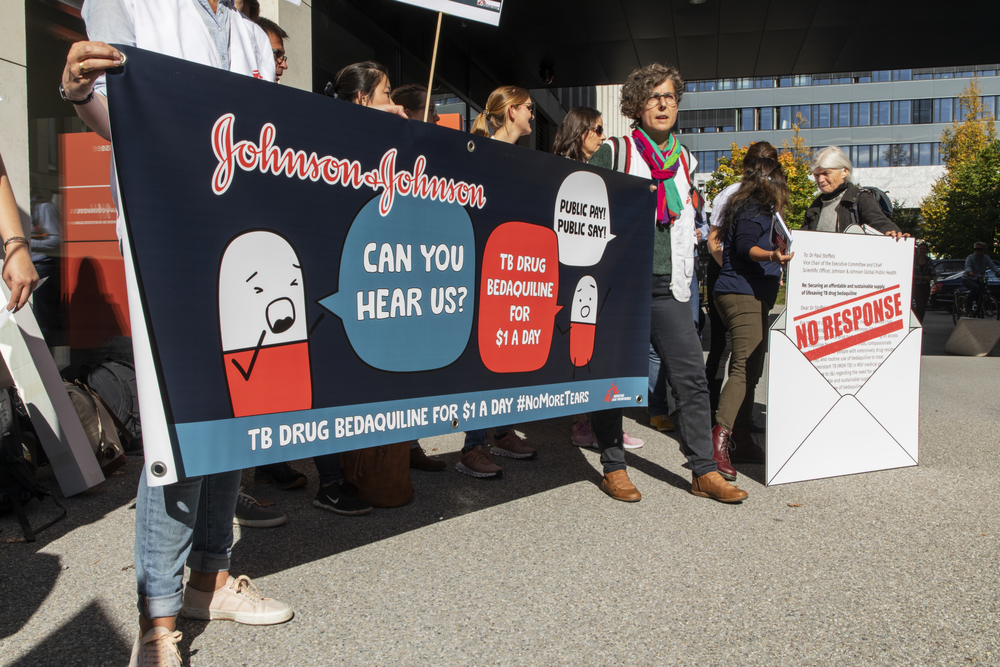
In 2019, MSF and our supporters chanted “We protest because we have hope” during protests outside the offices of pharmaceutical corporations. They protested to demand prices for tuberculosis medicines be lowered and therefore drew attention to this otherwise neglected concern. Canadians were among more than 120,000 people who signed a petition that urged the corporation to drop the price of this critical drug.
Advocating for survivors of sexual violence
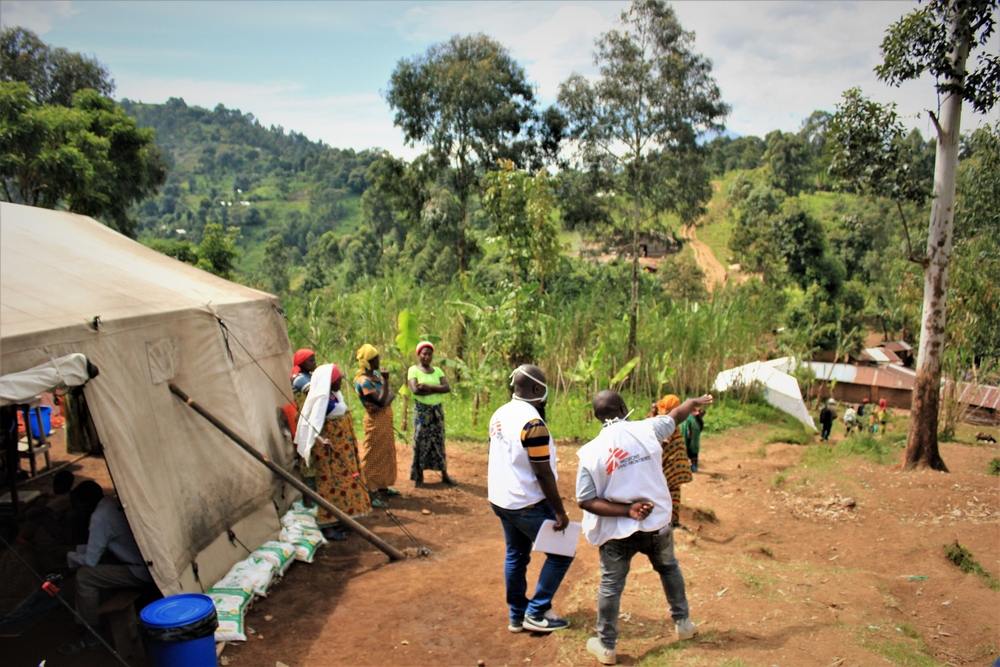
In 2023, MSF, along with more than 5,000 Canadians signed a letter calling on the Canadian Government to fund the humanitarian response in North Kivu, Democratic Republic of Congo — frequently listed as one of the most dangerous places on Earth to be a woman or girl.
Petitioning parliament to help Democratic Republic of Congo
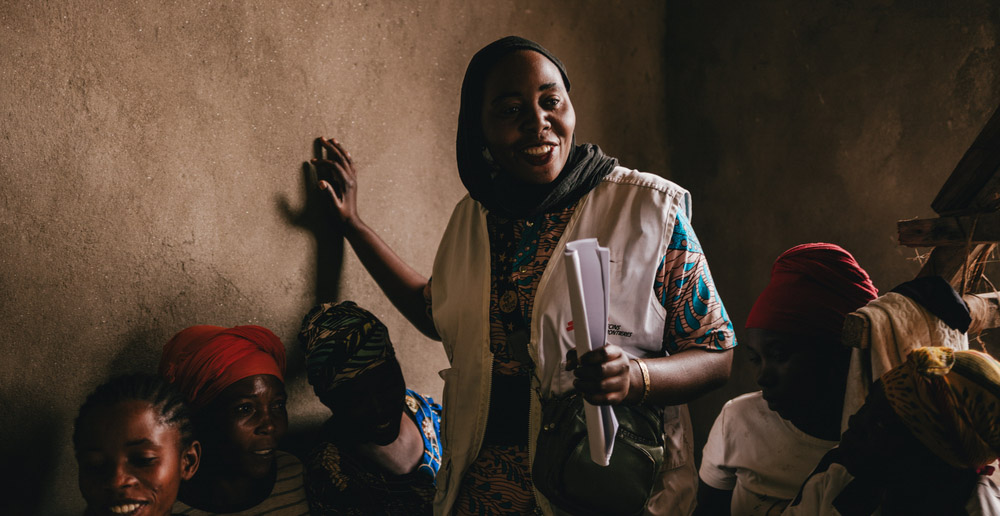
In 2024, MSF supported the launch of a parliamentary petition requesting the Canadian government increases its humanitarian assistance budget for DRC and to use diplomatic and political tools to help alleviate the suffering of those affected by this crisis.
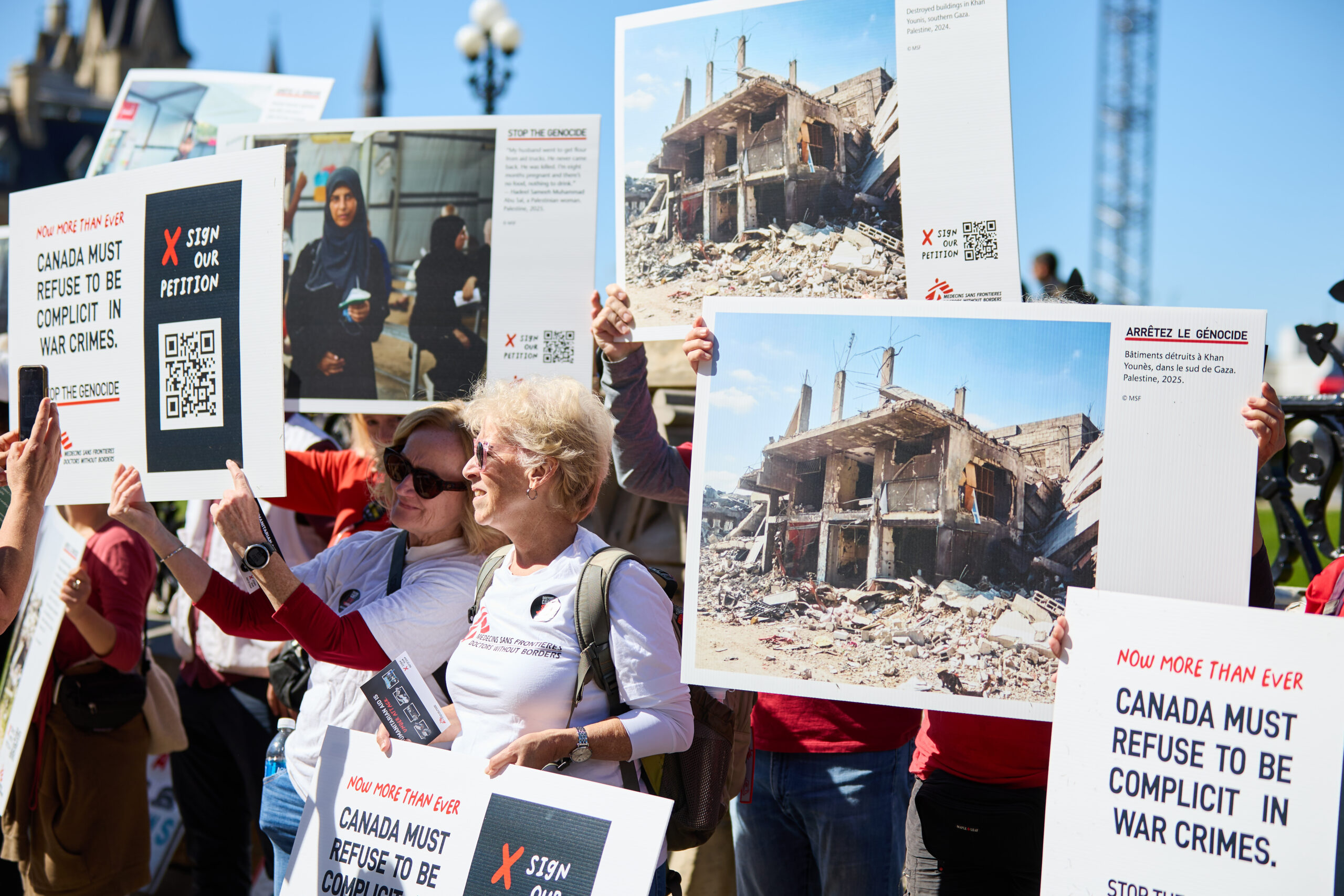
Drawing a line on genocide in Palestine
In 2025, MSF joined ‘Red Line for Gaza’ demonstrations across Canada and around the world that insisted on an end to genocide in Palestine. More than 26,000 supporters across Canada joined our call to champion the protection of all civilians and healthcare workers and facilities in times of conflict.