Yemen: Escalating conflict spurs massive displacement
Humanitarian needs are soaring as hundreds of thousands of people flee.
Since September 2026, the military escalation between Ansar Allah forces and the internationally recognized government backed by Saudi Arabia, has plunged people back into uncertainty. More than 230,000 people have been displaced from the western coast of Yemen, seeking refuge far from the frontline amid insecurity and uncertainty about how the situation will unfold. For many, this is not the first time they have had to flee for their lives since the war startedin 2015. The country now faces a worsening and chronically underfunded humanitarian crisis, with malnutrition and cholera on the rise.
For many, this is not the first time they have had to flee for their lives. Since the start of the war in 2015, Yemen has faced a worsening and chronically underfunded humanitarian crisis, with malnutrition and cholera on the rise.
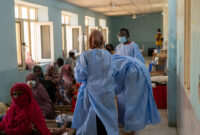
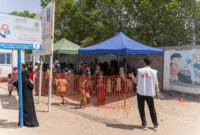
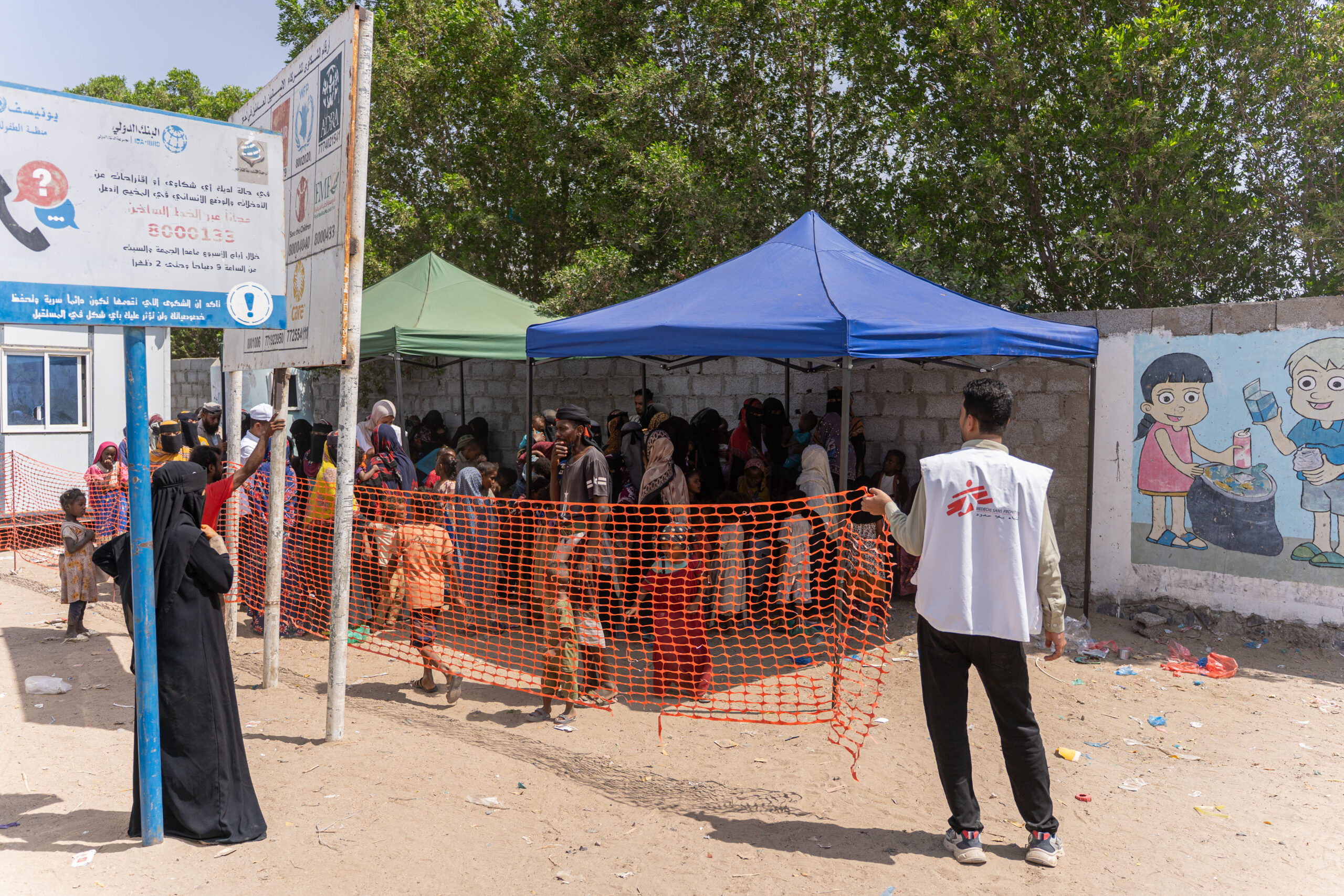
Doctors Without Borders/Médecins Sans Frontières (MSF) teams are providing support at health facilities and through mobile clinics in affected areas, witnessing the health effects of the poor living conditions many displaced people are facing. Among more than 1,000 consultations provided by MSF mobile teams since mid-September, the most common health issues were upper respiratory tract infections (245 cases), urinary tract infections (127), and gastritis (79) — all related to their living conditions.
“We see pregnant women who have not had access to a single prenatal care consultation and who had to deliver in unequipped and unsanitary places.”
Itta Helland-Hansen, MSF country coordinator in Yemen
Maher was a fisherman in Mocha before he fled last month with five other families. “We fled by a miracle; the roads were already closed,” says Maher. “It was a long distance; we walked almost a day and a half and took a bus.” He is currently residing in Atira displacement camp, Lahj governorate, around 250 kilometres from Mocha. “We sought refuge in the camp, but there were no tents. We stayed under the trees for almost a week in the middle of the wind before they could give us a tent.”
An extension was built at Atira camp to host the 150 newly displaced families. Today, around 310 families who have been displaced over the past decade of war live together in this desert-like land, which is kilometres away from any infrastructure and exposed to the burning sun.
“Displaced people are in critical need of medical and humanitarian support,” says Itta Helland-Hansen, MSF country coordinator in Yemen. “MSF has been conducting assessments and carrying out medical activities in different informal settlements and displaced camps and has witnessed the extremely difficult conditions displaced people are living in. We see pregnant women who have not had access to a single prenatal care consultation and who had to deliver in unequipped and unsanitary places; we keep referring acutely malnourished children to hospitals that are already reaching their full capacity; and we see how medical complications increase due to the limited access to healthcare.”
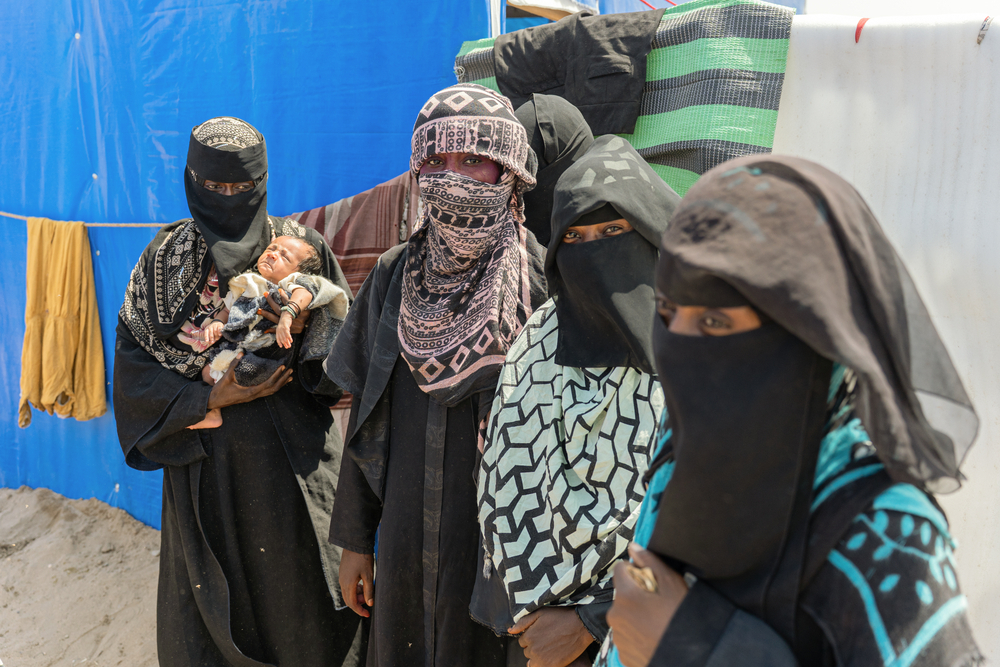
“Our main issue here is access to drinking water. I do not have money to buy bottles and my kids are thirsty. The water available in the tanks is salty.”
Fatima, a displaced person in Atira camp
Many displaced people are running low on their medications, especially those living with chronic diseases. “Our teams are seeing patients with empty boxes of medication for epilepsy, hypertension and diabetes, desperately asking for more,” says Helland-Hansen.
According to the World Health Organization (WHO), only $5.30 million has been secured of the $43.43 million needed to fund a 90-day emergency response in Yemen. Before the latest military escalation, efforts to address Yemen’s general humanitarian crisis were severely underfunded, with only 22 per cent of necessary funds secured.
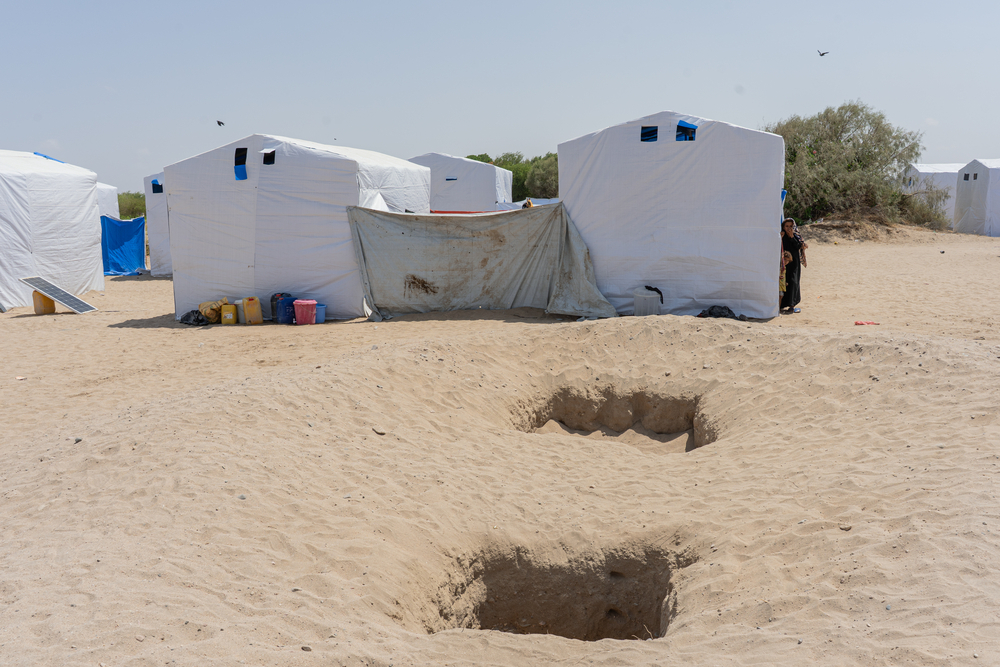
Fatima and her eight children fled Mocha at night, in a hurry, because of the shelling. She reached Atira camp with almost nothing. “Our main issue here is access to drinking water,” Fatima says. “I do not have money to buy bottles and my kids are thirsty. The water available in the tanks is salty. I am very tired; I suffer from heart and hypertension issues and had to push my kid, who uses a wheelchair, for long distances.”
Latrines are not yet available for the newly displaced people in Atira, increasing the risk of cholera spreading; cases have tripled in the past three weeks, the WHO has warned. In Mocha, western Yemen, the context remains volatile as the fighting continues. Our teams are maintaining their pediatric and maternal activities at the Mocha general hospital and continue to support a primary healthcare centre in Khokha, 50 kilometres north of Mocha. We also restarted our support in Mafraq al Mocha’s primary healthcare centre, 40 kilometres northeast of Mocha, after two weeks of disruption due to violence. Patients’ medical needs may be exacerbated by a context in which humanitarian and medical agencies struggle to respond, and access to supplies, such as ready-to-use therapeutic food for malnourished children, becomes increasingly difficult. In Khokha, cases of acute watery diarrhea have almost doubled in the past week, from 28 to 52.
“In this context, an urgent scale-up and inclusive response to displacement needs including water and sanitation, the improvement of living conditions and outbreak prevention must be prioritized,” says Helland-Hansen.