Chad: At Ouré-Cassoni, the reduction in humanitarian funding weighs on refugees’ daily lives
MSF warns Ouré-Cassoni must be among the priorities of the humanitarian response in the country.
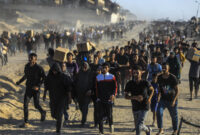
In eastern Chad, near the border with Sudan, more than 117,000 refugees live in the Ouré-Cassoni camp. As more families fleeing the war continue to arrive, needs like food, water, shelter and healthcare are increasing. Meanwhile, global humanitarian funding is in decline. Far from political boardrooms, the consequences are being felt in people’s daily lives. For Doctors Without Borders/Médecins Sans Frontières (MSF), Ouré-Cassoni must be among the priorities of the humanitarian response in Chad.

Sadia knows Ouré-Cassoni from the inside
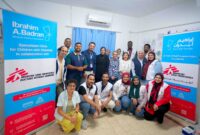
Sadia arrived in Ouré-Cassoni with her family after fleeing violence in Sudan. Today, she works in the camp as a health promoter with MSF.
“I arrived here as a refugee and today I work with other refugees,” Sadia says. “I know what it means to wonder what tomorrow will bring.”
Ouré-Cassoni is located in a remote region of Ennedi Est, in north-eastern Chad. Its isolation makes access to services and the delivery of aid more difficult. Since the war in Sudan began in April 2023, the camp has experienced several waves of arrivals.
“Ouré-Cassoni must be a priority for donors. We are talking about more than 117,000 people, with considerable needs and new arrivals every day.”
Joshua Ayuba Mpato, MSF project coordinator in Ouré-Cassoni
More than 60,000 people arrived in May 2025 following the fall of Zamzam camp, in North Darfur. When El-Fasher was taken over, more than 21,000 new arrivals were registered between October 2025 and August 2026. MSF teams continue to observe daily arrivals from Sudan.
The camp is therefore growing, but the resources allocated to the humanitarian response are not following the same trajectory.

When food assistance is reduced
For families in Ouré-Cassoni, the insufficiency of food is very real, it means not having enough to put on the table for their children.
“There are times when we do not know what we will feed our children the next day,” says Salwa, a refugee mother in the camp. “When distributions are reduced, we have to make do with very little.”
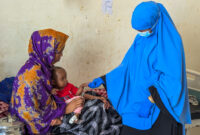
MSF teams are also seeing an increase in malnutrition among the children screened. Between 2025 and 2026, severe acute malnutrition increased from 2.2% to 3.4%, while moderate acute malnutrition increased from 10% to 13%.
Behind these percentages are children arriving at health facilities in need of nutritional treatment and parents trying to feed their families.
“Before, we could at least rely on distributions to help us feed the children,” says Salwa. “Now, we have to do more with what we have. When there is not enough food, the whole family suffers.”

Two litres of water a day
Water is another critical concern. In Ouré-Cassoni, only around two litres of water is available per person per day — far below the 15–20 litres recommended in emergency situations. Getting this water to families requires a complex chain: pumping it from the lake, treating it, checking its quality, transporting it and distributing it across the different areas of the camp. Reduced funding means less clean water being provided to people in the camp.
“For people living in Ouré-Cassoni, access to safe water in sufficient quantities is not a luxury: it is a basic necessity for their health and dignity.”
Joshua Ayuba Mpato, MSF project coordinator in Ouré-Cassoni
In July, more than 14 per cent of consultations carried out by MSF in the camp concerned cases of non-bloody diarrhea, often caused by a lack of clean drinking water.
“When we talk about humanitarian funding, we also need to think about very concrete needs: keeping pumps running, treating water and making sure it reaches families in sufficient quantities and on a regular basis,” says Joshua Ayuba Mpato, MSF project coordinator in Ouré-Cassoni. “For people living in Ouré-Cassoni, access to safe water in sufficient quantities is not a luxury: it is a basic necessity for their health and dignity.”

A precarious roof, difficult access to healthcare
After food and water, shelter is one of the main needs identified by communities. Thousands of families improvise homes using whatever materials they can find, often in conditions that provide limited protection.
These living conditions also have consequences for health. Respiratory infections, particularly those associated with precarious housing conditions, account for more than 30 per cent of MSF consultations across the different areas of the camp and among all age groups.
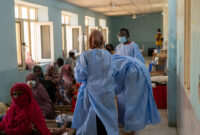
However, Ouré-Cassoni has only one health centre and and specialized care must be referred to other facilities
Dire living conditions and lack of assistance also translate into increased risks for women and girls, who are forced to leave the camp to collect water and firewood. Between January and July 2026, MSF teams provided care to 91 survivors of sexual violence in Ouré-Cassoni. Although it is not possible to determine how many of these episodes took place in Chad, after survivors fled Sudan, movement outside the camp exposes women to an increased risk of violence.

A huge camp, a shrinking response
Ouré-Cassoni was not included in the priority areas outlined in the 2026 Humanitarian Needs and Response Plan for Chad. For MSF the contrast is concerning. Needs are increasing at the very time that available resources are decreasing.
“Ouré-Cassoni must be a priority for donors,” says Mpato. “We are talking about more than 117,000 people, with considerable needs and new arrivals every day. The situation we are seeing here is not sustainable. Needs are increasing, but resources are not keeping pace. Without a critical increase in assistance, the gap between people’s needs and the humanitarian response will only continue to widen.”
In Ouré-Cassoni, the consequences of reductions in aid are therefore not abstract. They are felt in the meals families can provide, in the amount of water available, in precarious shelters and in access to healthcare.
For MSF, the scale and urgency of the needs in Ouré-Cassoni fully justify the prioritization of the camp in the humanitarian response in Chad.