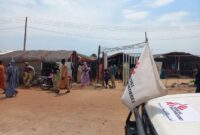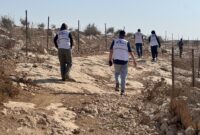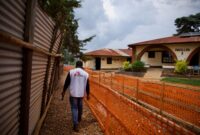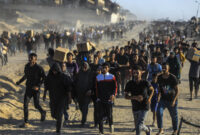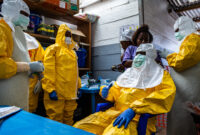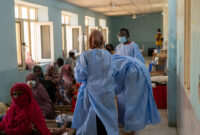
In the MSF-supported Daba Naira camp in Tawila, families live in fragile straw huts and makeshift shelters that provide almost no protection from harsh weather or fire. Sudan, 2026. © Cindy Gonzalez/MSF
SHARE THIS:

Sudan: Surviving sexual violence in Darfur

Inside Darfur’s displacement camps, survivors speak out on sexual violence amid ongoing conflict

In Tawila, North Darfur state, Sudan, the landscape has changed as successive waves of people fleeing violence across Darfur have arrived seeking safety since the start of the war in 2023. Camps like Daba Naira continued to grow as families escaped attacks carried out by the Rapid support Forces (RSF) in El Fasher, Zamzam and surrounding villages. Major influxes were recorded in April, August and again in November 2025 after the fall of El Fasher on Oct. 26.

Many arrived carrying only what they could bring – often nothing more than the clothes they were wearing.

In April 2026, Sudan enters its fourth year of war. For civilians, the conflict has meant relentless violence: mass killings, torture, detention and the destruction of homes, hospitals and essential infrastructure.

Across Sudan, sexual violence has become a pervasive feature of the war between Sudanese Armed Forces (SAF) and the RSF, affecting women and girls not only on front lines but along the routes of displacement and inside communities already struggling to survive. Reports describe assaults carried out by multiple perpetrators, often in front of family members, and patterns of ethnic targeting against non-Arab communities as a tool of humiliation and terror.

Many of the people arriving in Tawila have walked for days. They come with stories of deep loss, of families torn apart and of unimaginable violence endured along the way.

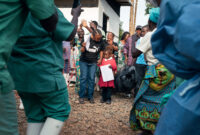
In Daba Naira camp, Tawila, MSF mental health teams lead health promotion sessions on sexual violence and general mental well-being. Sudan, 2026. © Cindy Gonzalez/MSF

Inside one of the safe spaces established by Doctors Without Borders/Médecins Sans Frontières (MSF) in Tawila, community members and MSF teams gather for discussions on mental health and sexual violence. These spaces are designed to provide information, reduce stigma and encourage survivors to seek care.

In many cases, these conversations are the first time survivors hear medical and psychological support is available.

In just over one month, between December 2025 and January 2026, MSF provided basic support — including psychological first aid and referrals to clinical care — to 732 survivors of sexual violence.

The stories that emerge in these gatherings are often painfully similar: attacks during violence in El Fasher, assaults along displacement routes, families separated or killed and long journeys on foot to reach safety.

Yet fear, stigma, lack of resources and insecurity continue to prevent many survivors from accessing the care they critically need.


“They killed my child, 12 years old, in front of my door,” Aisha says. “My own child.” He had been playing with other children when a shell hit a neighbour’s house. Three of them died.

That same night, Aisha buried her son. Her husband had already been killed earlier in the conflict in El Fasher.

As shelling spread and people ran in every direction, Aisha gathered her children and fled on foot toward Abu Delaig. “We walked for almost four hours,” she says. “People were running everywhere.”

On the road, Aisha was raped while her children were only a short distance away. Months later, she realized she had become pregnant as a result of the assault.

“I did not tell anyone what happened,” says Aisha. “My husband was gone and his brother was not there. I kept everything to myself.”

Her journey didn’t stop there. Months later, settled in El Fasher, violence escalated and Aisha was attacked again.

“When they beat me and raped me, it happened twice,” Aisha says. “I fought them and they hit me. The slaps they gave me caused my eyes to hurt. My tooth was hit and it fell out.”

Three days later she began to bleed.

“They beat me so hard, it went down,” she says. “I knew then that I miscarried. The bleeding continued for almost a whole month.

Our life was beautiful, but after my husband and child were killed… I wish I died too, better. But no one dies before their time.”

When Aisha sits with others, she hears stories similar to her own. “They say, ‘my child died,’ ‘my husband died,’ ‘my brother died,’” she says. “When they speak, I tell myself they are all the same.”

Despite everything, her focus remains on her children. “Now I only want to raise them,” she says. “If I could find work, I would do it. But I am still too sick to work.”


Halima recalls the terror of living in El Fasher. The capital of North Darfur state was besieged for 500 days by the RSF and was been one of the main battlefields of the ongoing war in Sudan until October 2025. “Suddenly there would be strikes, shelling, stray bullets,” Halima says. “We were terrified all the time.”

Her grandfather was killed in one of the drone attacks and her father was badly injured.

“After my father was wounded, we decided to leave in July,” says Halima. “It took us two days on the road. They tortured us so much. There were people who died of thirst. We begged them [RSF] for water and they said, ‘You are the women of slaves, we will not give you.’”

Civilians warned them. “They told us, ‘Girls, this place isn’t safe.’” Trying to flee, Halima and her sister were denied passage. “They had other intentions, like rape,” she says. Through careful planning, they eventually boarded a truck undetected, separated from their family.

Even when Halima and her sister managed to escape rape, they faced sexual harassment and violence on the road. “They beat us and searched us in a way that was not nice, in a disgusting way,” she says. “It was very difficult… until your tears shed from the difficulty of it. They searched people in general, even my mother. The time they searched her, my sister cried.”

Even months earlier, life had been harsh. “The situation was difficult and goods were expensive,” Halima says. “There were girls who would take the risk and go get goods from Gerni to bring them to El Fasher to earn their living. Many were raped. Some would go and never return. It all happened.”

Halima* lives in Daba Naira camp, where MSF supports displaced communities. Sudan, 2026. © Cindy Gonzalez/MSF

*Name changed for privacy.
A woman walks through Daba Naira camp for internally displaced people in Tawila, North Darfur. Sudan, 2026. © Cindy Gonzalez/MSF

For women and girls in Darfur, everyday movements — from markets to displacement routes — carry high risk of sexual violence.

Inside displacement camps, the risks do not disappear. Overcrowded shelters offer little privacy or safety, while distant water points, limited bathing areas and insufficient latrines force women and girls to move through unsafe spaces, turning places meant for refuge into sites of ongoing insecurity.

Between January 2024 and November 2025, MSF treated over 3,396 survivors in South and North Darfur, with more than 90 per cent in North Darfur assaulted while travelling between towns in search of safety.

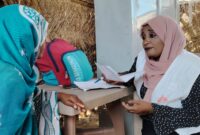
People who have survived sexual violence seek mental health care at the MSF-supported Daba Naira camp, Tawila. Sudan, 2026. © Cindy Gonzalez/MSF

Even after the violence has passed, the effects linger. Survivors continue to live with the trauma and fear of what they experienced. Every day brings reminders of loss and insecurity.

MSF provides medical and psychological care, a space to be heard, but the reality remains: survivors live without protection, justice or the reassurance that safety is possible.

Survivors and women’s leaders have repeatedly called for critical access to confidential medical care, stronger protection mechanisms, safe spaces for women and girls and an end to the impunity that allows sexual violence to continue.

*Name changed for privacy.