Mexico: Football in Chalco connects children with major humanitarian crises
A local football tournament teaches children in Chalco about global humanitarian crises
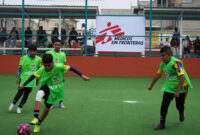
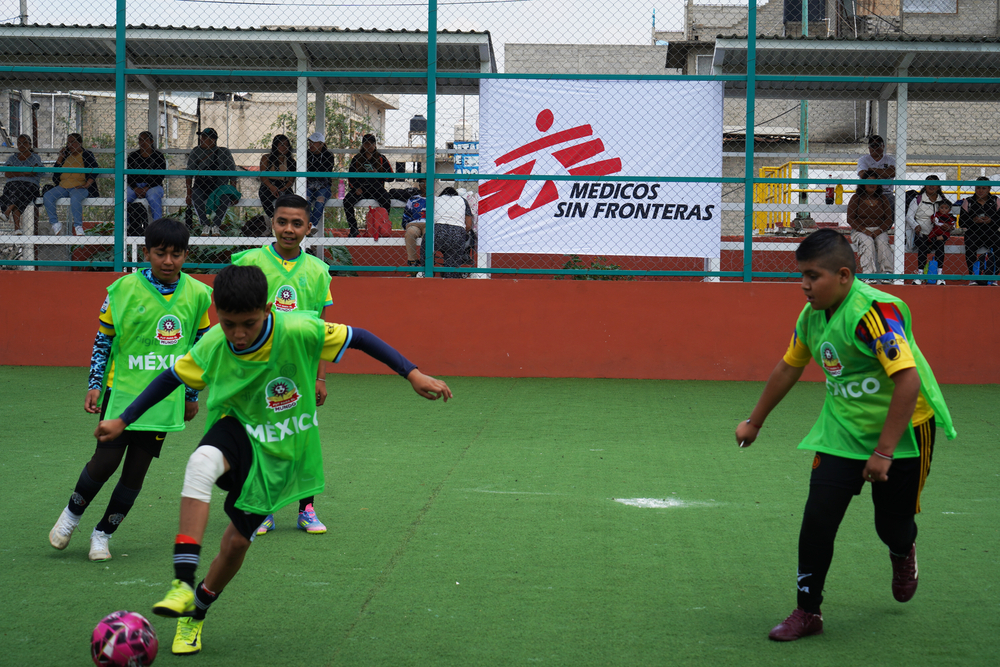
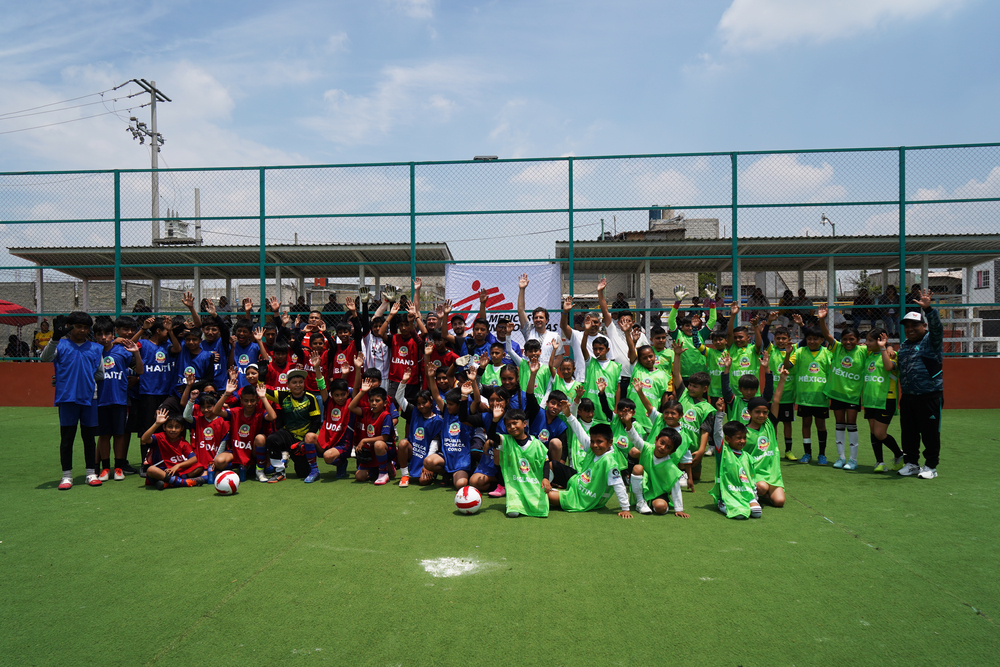
Palestine, Haiti, Sudan, Mexico and the Democratic Republic of Congo begin their warm-up exercises under the sun. Off the field, Greece and Lebanon finish registrations before the opening ceremony. It is not Azteca stadium, nor Toronto, Los Angeles, or New York. But these children, aged between seven and 14, will run onto the pitch, excited and ready to play for countries they have likely never heard about before.And they will play in their own neighbourhood: Chalco.
Located 35 kilometres from downtown Mexico City, this municipality in the Valley of Mexico is more often associated with recurring floods, limited public services and violence than with football. Yet on a June morning, attention shifts to the ball and to the distant countries represented by the feet and jerseys of local children.
“My son is playing for Lebanon, wearing red,” says Roberto. “Of course I’ve heard of the country, but I don’t know much beyond what appears in the news. It’s fun to see the kids representing countries that may not be football powerhouses but are still fighting their own battles.” Before each match, the referee explains the usual rules of a friendly tournament: no sliding tackles, no rough challenges; we are here to have fun and play.
Then comes a less familiar introduction.
“Today we represent Palestine, a country that has endured the devastating effects of a brutal war affecting millions of people,” I read into the microphone the referee has just handed me. For a moment, I wonder whether it might be too much information for children. Perhaps suffering thousands of kilometres away feels less distant in a place where hardship is also part of everyday life. Still, I continue: “At Medicos Sins Fronteras [Doctors Without Borders] or MSF, we witness the resilience of the Palestinian people every day. More than 1,700 staff members continue providing emergency medical care despite extraordinary challenges. Today, Palestine represents a team that shows solidarity is more than words. It is the decision to care for others, even in the most difficult moments.”
“We had to travel almost two hours and wait a long time before I could get treatment. We didn’t know about MSF then, but now we know they’re here in the neighbourhood.”
Juan, a participant
Similar messages accompany the other teams: the taro leaf as a symbol of identity for Rohingya people in Bangladesh; neighbours in Ukraine supporting older people through the hardships of war; the migration journeys of people from Haiti and Venezuela; forced displacement and community-led support networks in Sudan; the experiences of people crossing the Mediterranean; and the courage required to maintain a sense of normal life in the Democratic Republic of Congo. There is no applause after these introductions, but there is a respectful silence, even among the children, that acknowledges these realities from this small football field.
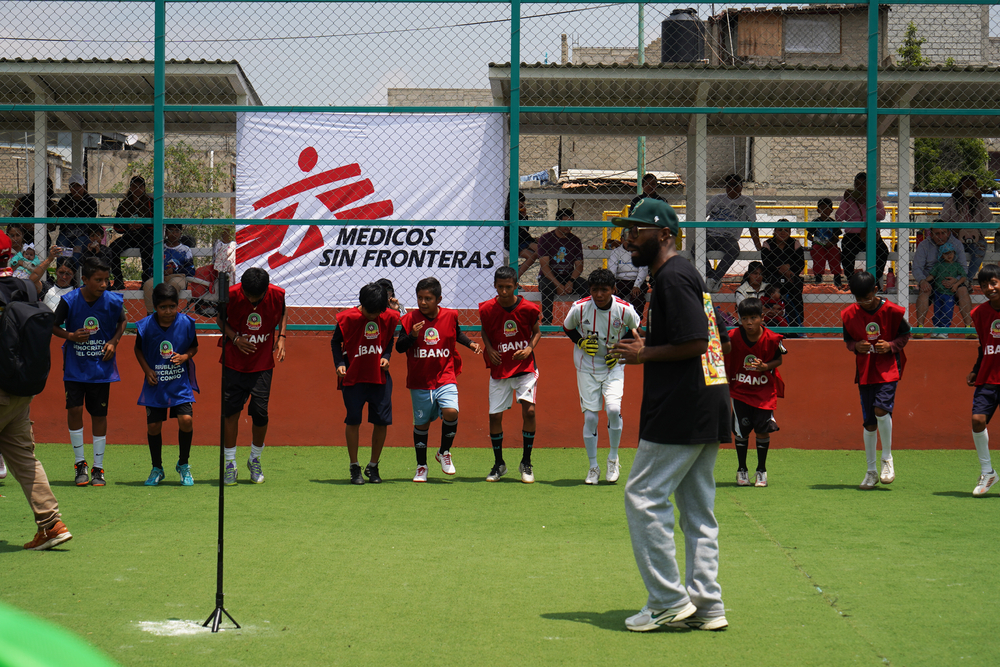
Families cheer from the sidelines as the matches begin. Eleven-year-old Juan watches from behind the fence in his Haiti jersey, waiting for his turn to step onto the field.
“I broke my arm last year,” he says. “We had to travel almost two hours and wait a long time before I could get treatment. We didn’t know about MSF then, but now we know they’re here in the neighbourhood.” He proudly shows the scar on his arm, displaying it almost like a trophy.
Access to healthcare, along with many other essential services, remains a challenge in Chalco. Large sections of the municipality still lack paved roads and drainage systems. Opportunities for recreational activities are limited, but community engagement is not.
“When we learned MSF was coming, we knew we had to involve the schools,” says Víctor Ortiz, a teacher who helped bring together more than 60 children for the event alongside the project’s health promotion teams. “Sport is a fundamental tool for transforming our country. We face difficult circumstances here, and sport and culture are among the best ways to confront them.”
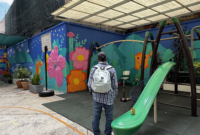
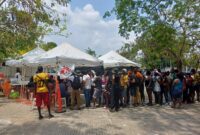
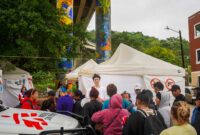
Around the field, other activities unfold throughout the day. Health promotion teams share information with parents about available services and clinic locations, while younger children colour football-themed mandalas. In another corner, dozens of hands work together on a large mural where children express their interests, dreams, concerns and aspirations. The variety of characters painted across the banner reflects what a shared community space can look like. Nearby, the foosball tables generate cheers almost as loud as those coming from the matches themselves.
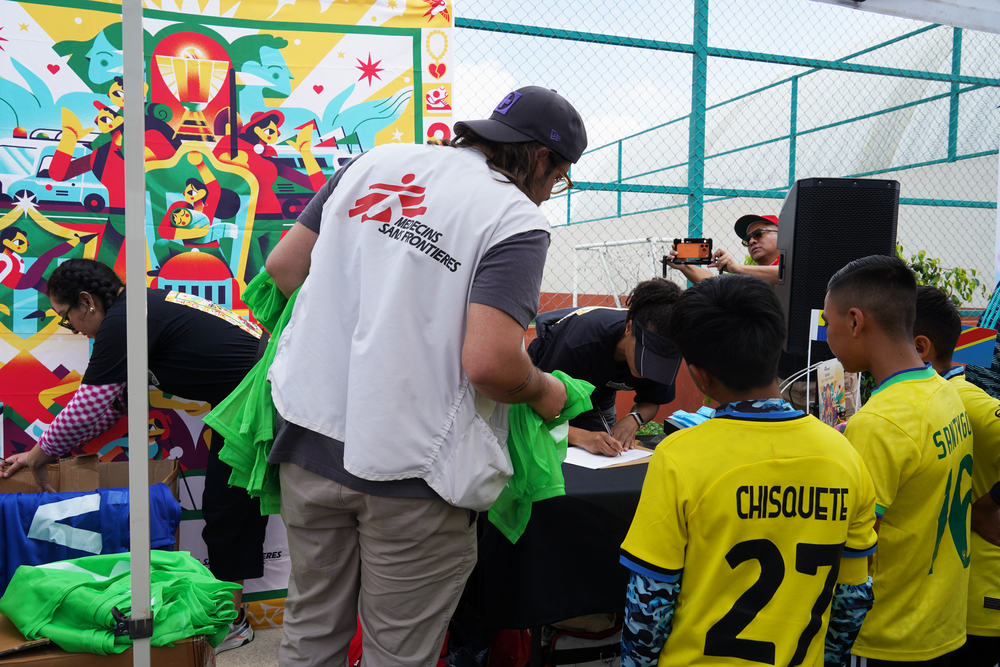
Haiti wins its match against Sudan in a penalty shootout. Lebanon scores five against Bangladesh. Still, in the end, none of that really matters.
The children may not remember every context or every statistic. What they may remember is the day they played as part of a team different from their school or neighbourhood. They may remember representing countries that exist far beyond their daily horizons, places where children just like them also chase a football, regardless of the circumstances around them. Most of all, they may remember the day when the World Cup came to Chalco, and they were at the centre of it.