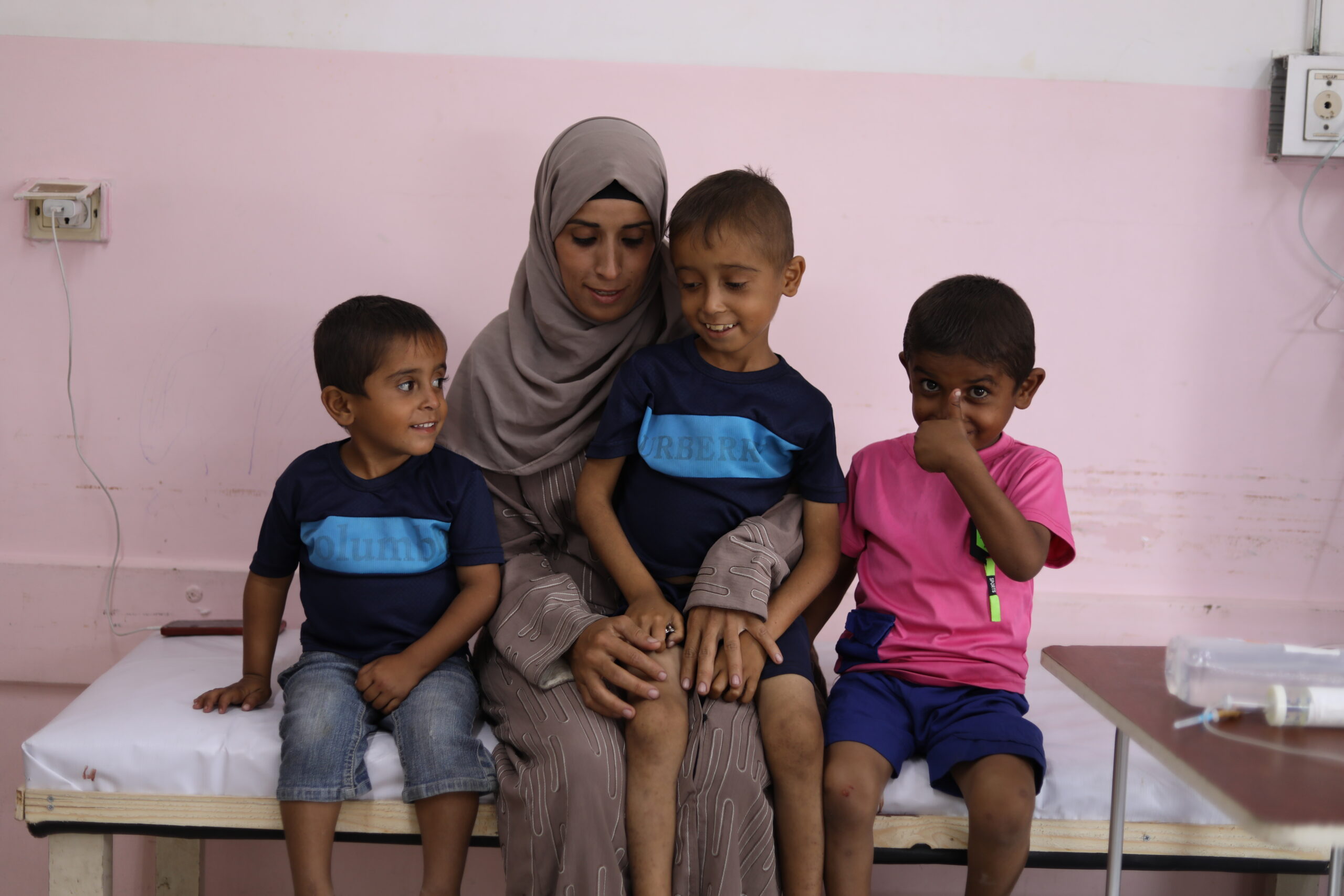
Palestine: Patients in Nasser hospital in urgent need of medical evacuation
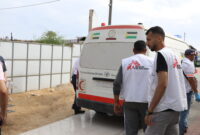
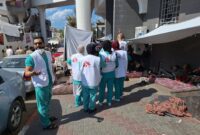
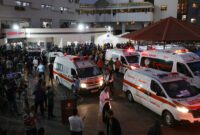
Five patients inside the MSF-supported Nasser hospital share their account as they wait for lifesaving medical evacuation.
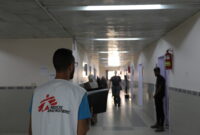
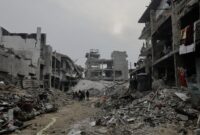
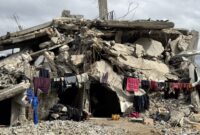
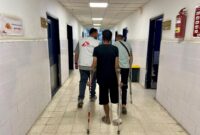
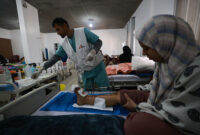
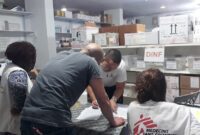
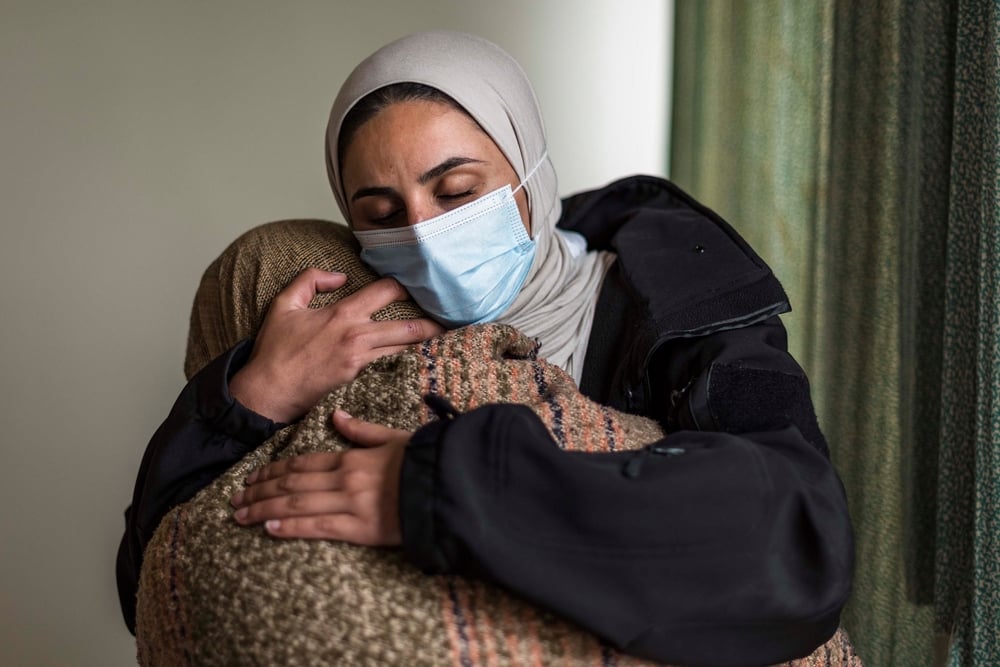
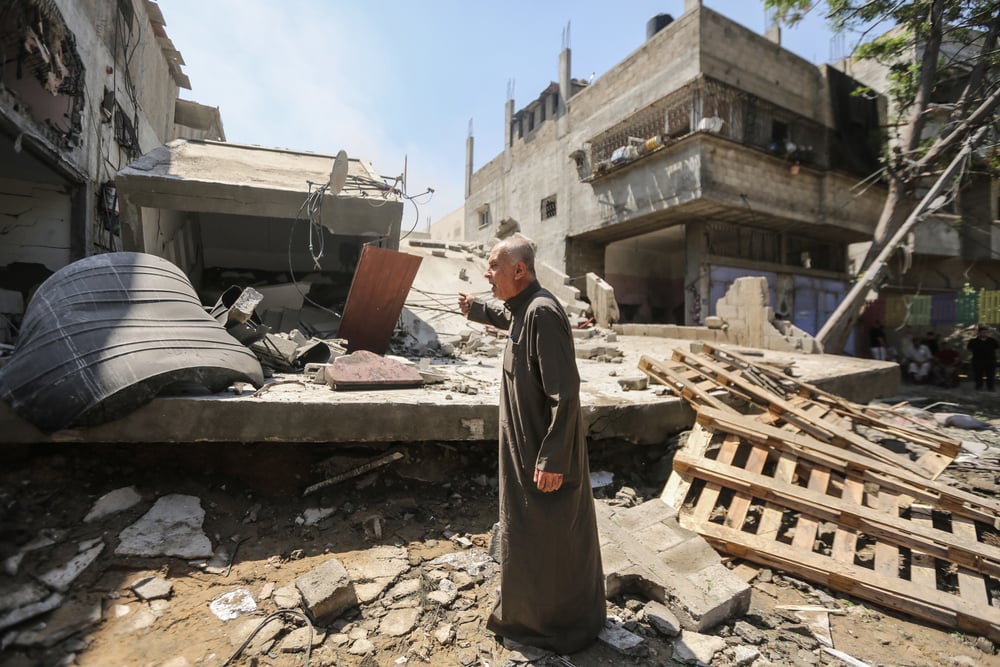
Five patients from the Doctors Without Borders/Médecins Sans Frontières (MSF)-supported Nasser hospital share their stories while awaiting medical evacuation from Gaza. Two mothers speak about their children’s critical conditions and three adults describe their in need of lifesaving treatment abroad. Their testimonies document the struggle of Palestinians who can no longer access essential medical care due to the decimation of Gaza’s health system by Israeli forces.
There are now more than 18,500 people awaiting medical evacuation from Gaza. More than one in five of them are children.
Yet only a small portion of those in need of medical evacuation have been able to do so. Critical cases are being delayed or denied, often with fatal consequences. More than 1,000 patients have died waiting since July 2024, according to the Ministry of Health. This figure is likely underreported.
These stories highlight the urgent need for a permanent medical evacuation mechanism and unhindered humanitarian access so patients can receive the care they need and eventually return home safely.
Sami’s story
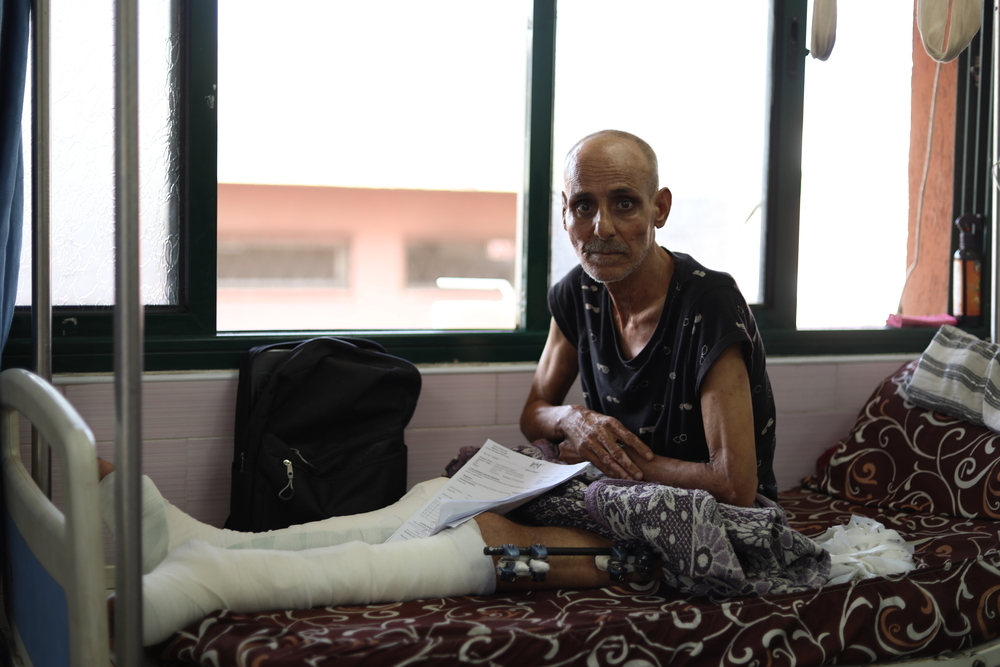
I was in my family’s house, a six-story building. They [Israeli forces] asked us to evacuate. I was thirty metres away from my son. They hit my son and he was killed on the spot. After, they targeted me too with a missile.
It was in Zaytoun neighbourhood, within eight minutes the whole house was destroyed. I stayed in the Mamadani hospital for nearly two and a half months. Then they asked me to evacuate. The situation has deteriorated for us in Gaza, around the Baptist area and such. So, I evacuated to a tent in Tal El Hawa. I set my tent near a house.
Then the Israeli’s threatened to bomb the house. People carried me, as I cannot walk at all due to my injuries. They took me and we ran. They bombed the house, it was completely destroyed. Nothing remained, not a thing. The transfer for [medical] evacuation has been issued for a while. They registered me here, we are waiting. We hope to God that, God, He will relieve. I have a son who’s a cancer patient and is waiting to be evacuated too. It’s been a month since he was supposed to travel.
Khader’s story
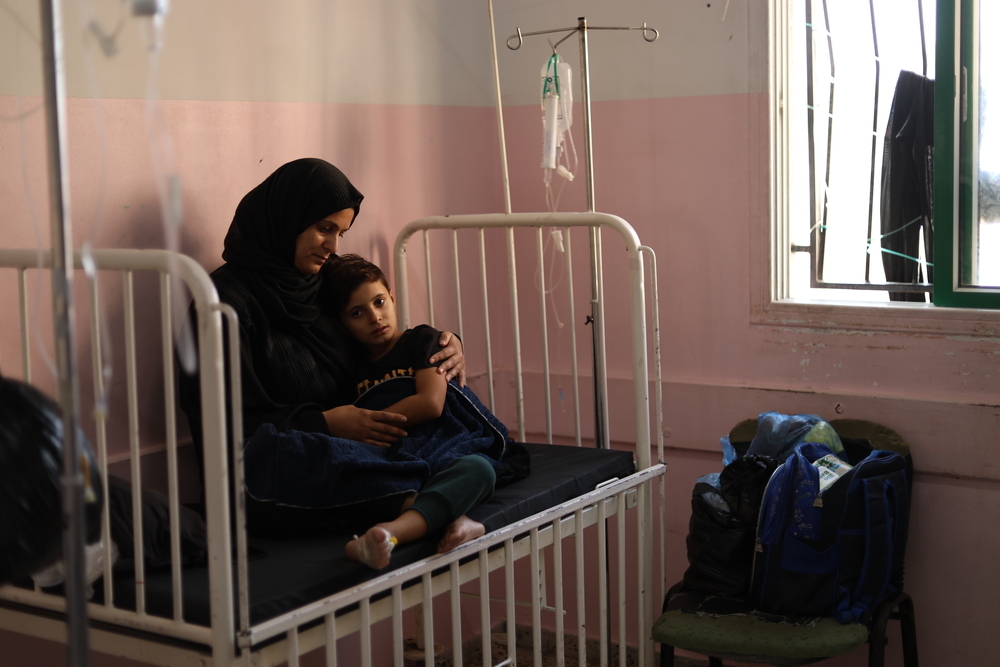
My son has a disease called carbohydrate malabsorption syndrome. That’s the name of the disease. He used to drink a special milk formula to regulate his sugar and his problems. For two years, due to the war, that milk has been cut off for him. It stopped, because it’s not available due to the war. So, he developed problems in his kidney. The right kidney, which was originally in his pelvis, wasted away. And the left kidney expanded due to urine retention and he developed sugar spikes.
Khader is a normal child. He loves to go out, he loves to move a lot, but because of Khader’s condition, I haven’t sent him to school. He has constant diarrhea, 24 hours spent going back and forth to the bathroom – every 10 to 15 minutes, diarrhea. I wish I could say he goes out to play with the kids. He goes out, he can’t even reach the door, he comes back for the bathroom. He can’t stay playing with the kids.
Many times, Khader was about to die in my arms. I didn’t have money to call a car to take him to the hospital. I would wait until ambulances had finished with injury cases and other urgent cases, so someone could just come and save Khader. The situation has been like this for two years.
I felt all his sickness. Since he was 40 days old, he has been suffering in this way. His condition worsened because of the war. There is no food provided, there is no milk, it was cut off for him.
Maram’s story
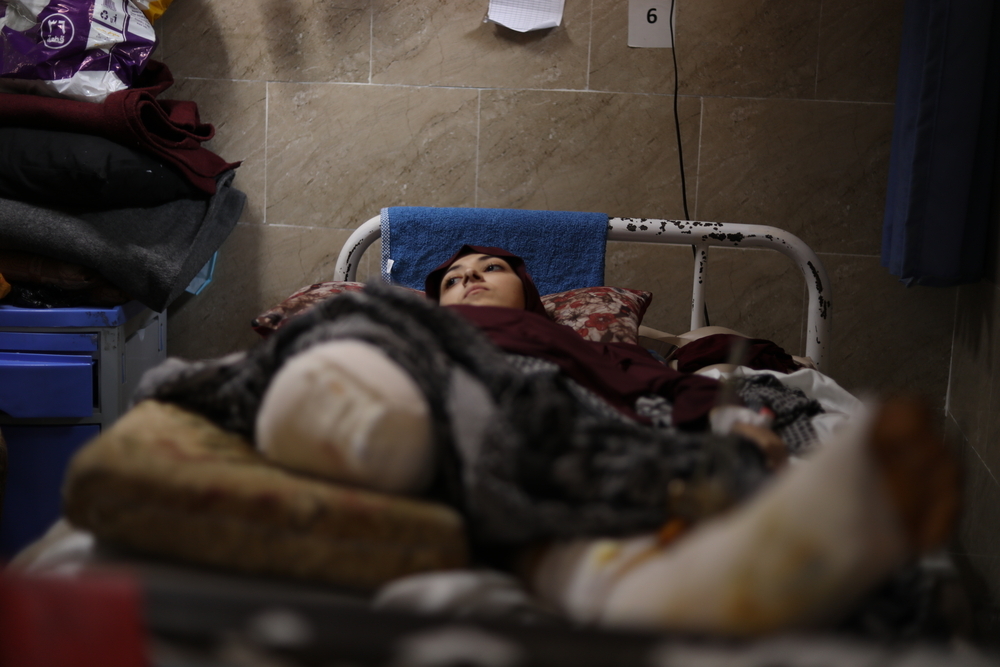
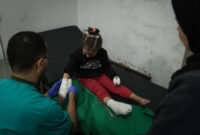
On Oct. 1, we were bombed by the occupation in a tent in Zawaida, in Deir al-Balah. I remained for about 15 minutes lying on the ground, my legs injured. My mother, father, grandmother and my older sister were all killed. After, young men from the street took me on a car to the (MSF) field hospital in Deir al-Balah. They bandaged my legs and gave me medications.
After that, they transferred me by ambulance to Nasser medical hospital, due to the lack of vascular doctors at the field hospital. There, they performed an amputation on my right leg and put a plate in my left leg, and they opened my abdomen because of shrapnel in the small intestines and shrapnel in the large intestines. My abdomen was opened three times due to a problem in the intestines. Now, my abdomen has been sutured, and my left leg has a skin graft. It has been sutured and my right leg has been sutured.
There is no difference between before the ceasefire and after. I am newly injured and have just lost my family. It doesn’t feel any different. It doesn’t feel any different, ceasefire or not.
Osama’s story
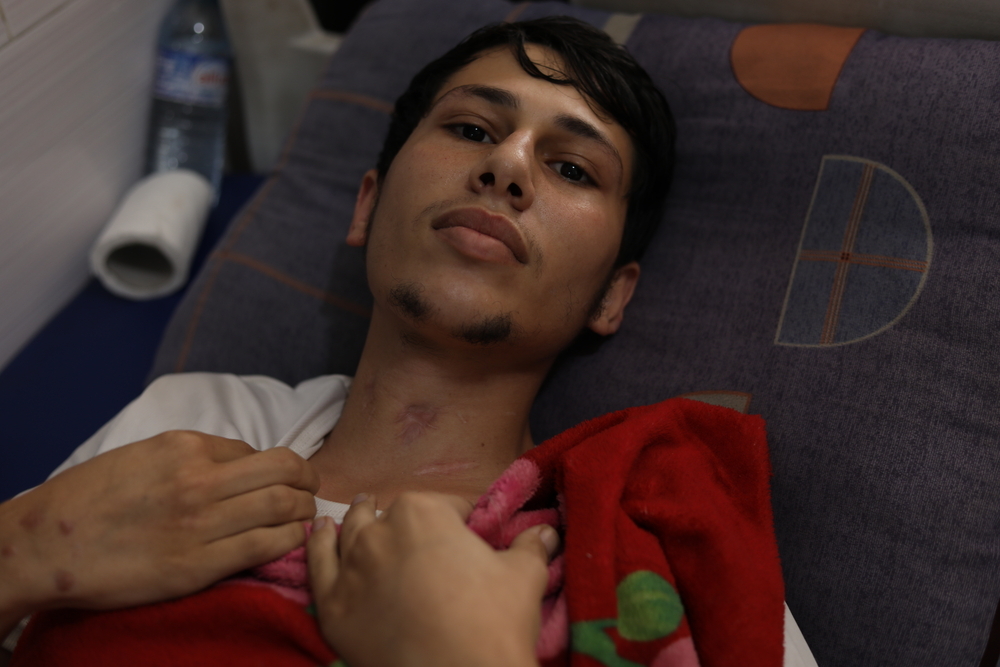
What happened is that I came on a visit to Deir al-Balah – it was my first time visiting the south— and the airstrike happened in a tent next to the place where I was. I was admitted to the hospital and stayed for 13 hours in surgery. My left leg was amputated. My right leg suffered from complex fractures and an external fixator was installed. And also, a neck incision was made and a tracheostomy was placed.
I have two referrals. One referral from this injury that I am suffering from… and the other from a previous injury, back in November.
“[The first injury] was when they [Israeli forces] bombed my uncle’s house and all the neighbours’ houses they were completely bombed. I was trapped under the rubble for 23 hours. I got out from under the rubble after struggling, by the grace of God. I stayed in the hospital for 45 days. And I had a fracture in the spinal column.
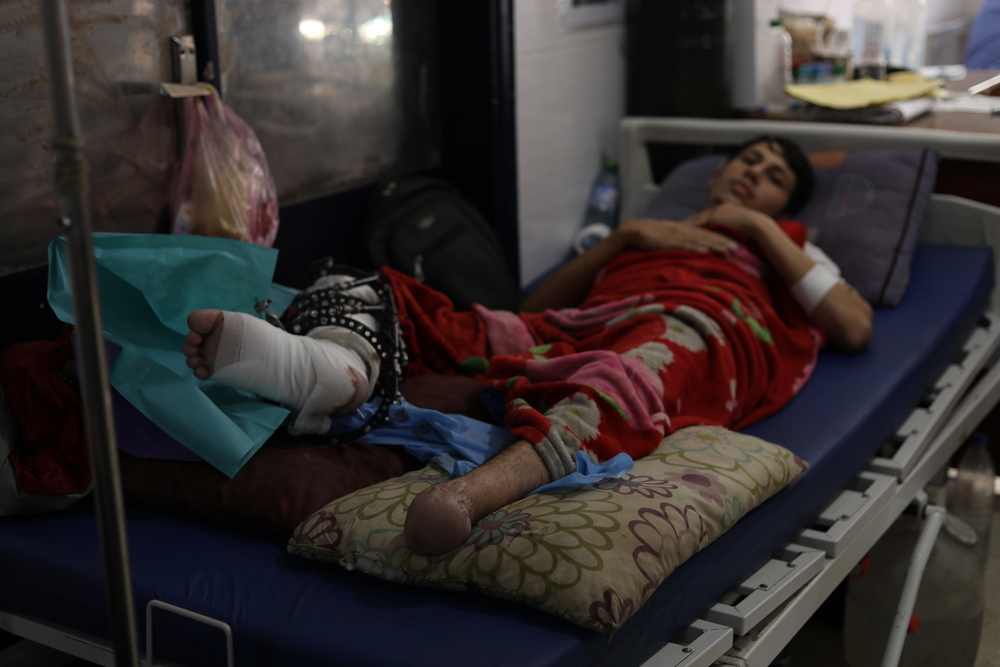
Death. I was only thinking about death. It was very cold. I kept imagining things no one would think about. I was screaming, screaming from the pain, because my leg was trapped under [rubble] piled on it, I screamed from pain and agony and the thoughts… It was difficult. The feeling was difficult whether I would be saved from death or not.
When they reached me, I lost consciousness, I found myself in the hospital. Why aren’t we being medically evacuated? We are all injured. I hope I can leave for treatment. All I want is to stand on my feet, that’s all I want. I want them to fit me with a prosthetic limb and perform the surgeries on my other foot, so I can stand on my feet again.
Qasem’s story
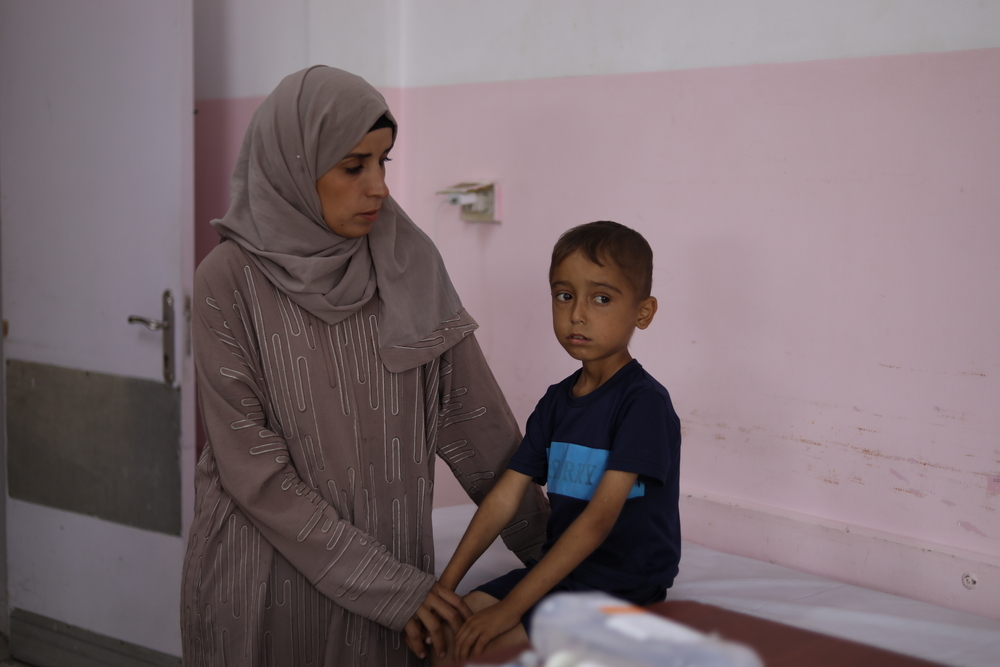
I have three children who need evacuation, meaning they need medical treatment abroad. I have medical transfers for them. A daughter of mine has already died from the same disease that the other three have. This was also due to a lack of treatment, even though things were better before the war, there was always a lack of medication in Gaza.
We are from Rafah, we were displaced to Al-Mawasi, Khan Younis. I sometimes struggle to reach the hospital, especially at night, if one of my children has an asthma attack, I don’t know how to act. One time, I left at one a.m., carrying them, running to the hospital. It’s a long distance.
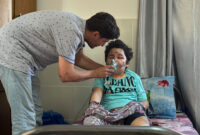
Qasem has acute malnutrition. His health was better before the period of famine. Then he started to lose weight and had acute malnutrition. He started to swell, his hands swelled, his legs swelled, and his face swelled. He couldn’t breathe; he would turn blue. It shocked me that Qasem reached this stage, as his sister reached it. We didn’t make it in time for her. She had liver failure due to the lack of proteins and she died.
Things were okay back then, there was treatment even if it was little. But now, there is nothing. I am afraid what happened to his sister will happen to Qasem and his other siblings. That’s why I wish to get to them out in time before I lose them.”
“Two months ago, the tanks invaded us and no one knew they were coming. Suddenly, everyone started running. We fled, I didn’t even have time to take the nebulizer, the nebulizer machine for my sick children. I couldn’t find it. After the Israelis withdrew and we went back to check our tents, we didn’t find anything. The nebulizer was broken. The medicines Qaseem takes, his vitamins and proteins, all of it was gone. Nothing, nothing, we found nothing.
Related news

Middle East and North Africa: Behind the armour, men’s mental health
Palestine: Ceasefire in Gaza, humanitarian aid must flow immediately